.png)

Last month, I found myself in an unfamiliar position during a client workshop. After years of fluently navigating Google Workspace and Apple ecosystems, I was suddenly confronted with Microsoft Teams, SharePoint, and a labyrinth of Office 365 permissions I didn’t understand. The school’s IT lead was walking me through their setup, and I had a choice: nod along and pretend I knew what I was doing, or admit I was genuinely confused about Automate, the difference between AI & BI and why there was an obsession with the word ‘Power’.
I chose vulnerability. “Right, I’m going to need you to explain this like I’m five because I’m completely lost in your Microsoft world.”
The IT lead laughed, visibly relaxed, and spent the next ten minutes giving me a proper tour. More importantly, when we hit a technical snag later in the day, three different staff members immediately volunteered possible solutions rather than waiting for me—the supposed expert—to sort it out. That small admission of incompetence had created permission for collective problem-solving.
This is what I call strategic vulnerability. Not always oversharing about my mental health journey in a professional setting. Not dumping my anxieties onto a client. Simply acknowledging, at the right moment and in the right context, that I didn’t know something and that this was perfectly fine.
We’re living through a bizarre contradiction in leadership culture. On one hand, we’re told to “bring our whole selves to work” and “lead with authenticity.” On the other, we’re expected to project unwavering confidence, have all the answers, and never let them see us sweat. The result is a generation of leaders performing authenticity whilst wearing increasingly heavy armour, exhausted by the effort of appearing simultaneously vulnerable and invincible. Strategic vulnerability isn’t weakness. It’s perhaps the most undervalued leadership capability in modern organisations. But like most powerful tools, it requires precision, timing, and a clear understanding of what you’re trying to achieve.

The Authenticity Trap
The corporate world has developed a peculiar relationship with authenticity. We’ve turned it into a performance, a checkbox on the leadership development form. “Be authentic,” the consultants tell us, usually shortly before explaining why your authentic self needs significant modification to succeed in this organisation.
Brené Brown’s research on vulnerability has been simultaneously liberating and weaponised. Her core insight - that vulnerability is the birthplace of innovation, creativity, and change - is profound and true. But it’s been bastardised into a cultural expectation that leaders should share everything, all the time, as proof of their authenticity. In my book, I dedicate a whole chapter to Brown’s work because she makes a crucial distinction that often gets lost: vulnerability is about emotional exposure, uncertainty, and risk. It’s not the same as indiscriminate disclosure.
“Vulnerability is not winning or losing; it’s having the courage to show up and be seen when we have no control over the outcome.” Brené Brown
Notice what’s not in that definition: broadcasting every insecurity to everyone who’ll listen.
I’ve watched headteachers announce in staff meetings that they’re “committed to authentic leadership” before proceeding to share deeply personal struggles in ways that make everyone in the room uncomfortable. The intention is good as they’re trying to model vulnerability. But what they’re actually modelling is poor boundary management and a fundamental misunderstanding of what their team needs from them.
The “bring your whole self to work” mantra sounds lovely until you think about it for more than thirty seconds. Your whole self? The version of you that’s still processing childhood trauma? The you that’s furious with your partner this morning? The you that’s questioning whether you’re in the right career? That’s not what anyone needs at 9am on a Tuesday.
What people actually need is your professional self, which can absolutely include vulnerability, but should be strategically deployed rather than indiscriminately splattered across every interaction. This is why we need selective authenticity - being genuine without being exhausting, real without being reckless.
Maya Angelou understood this intuitively. Again, as I discuss in my book, she spoke extensively about the courage required to be vulnerable, but she was also fiercely protective of her inner life. She chose carefully what to reveal, when, and to whom. That’s not inauthenticity. That’s wisdom.
“There is no greater agony than bearing an untold story inside you." Maya Angelou
The Psychology of Strategic Disclosure
There’s actual science behind why strategic vulnerability works, and understanding it helps us deploy it more effectively. Psychologist Sidney Jourard developed self-disclosure theory in the 1960s, arguing that revealing personal information creates intimacy and trust. But - and this is crucial - his research showed that disclosure must be reciprocal and appropriate to context. One-sided vulnerability doesn’t build connection; it creates discomfort and imbalance.
There is an intimacy paradox that sits at the heart of this. We must risk exposure to create genuine connection, but we must also protect ourselves to maintain the capacity for that connection. It’s a balancing act that requires constant calibration.

I have found that neuroscience offers some insights here. When we witness someone being vulnerable, admitting uncertainty, acknowledging mistakes or expressing genuine emotion, our mirror neurons fire. These are the brain cells that help us understand and empathise with others’ experiences. Strategic vulnerability activates this neural machinery, creating the conditions for trust and collaboration. But there’s a threshold. Too much vulnerability, or vulnerability deployed inappropriately, triggers different responses like discomfort, withdrawal, or loss of confidence in the vulnerable person’s competence.
This connects directly to my own journey with disclosure. In FRiDEAS #50, I wrote publicly for the first time about my autism diagnosis alongside my ADHD. That wasn’t a casual decision. I’d been sitting with that information for over a year, working through what it meant with my confidantes, deciding what would be gained and lost by sharing it publicly. The decision to disclose was strategic. I wanted to write about neurodiversity in education and business with greater authenticity. I wanted other adults who were questioning their own neurological differences to see that diagnosis later in life is both valid and valuable. And frankly, I was tired of the cognitive load required to mask certain traits in professional settings.
But I was also careful about how I disclosed it. I didn’t lead with my diagnosis in every professional interaction. I didn’t use it as an excuse for behaviour that needed addressing. I presented it as information that might help people understand my working style, not as a shield against accountability or a demand for special treatment.
This is the difference between trauma dumping, strategic vulnerability, and calculated authenticity. Trauma dumping is emotional vomiting, unloading your psychological baggage onto others without consideration for their capacity or consent. Strategic vulnerability is purposeful disclosure designed to build connection, model openness, or create psychological safety. Calculated authenticity is context-dependent openness, being genuine whilst recognising that different relationships and settings require different levels of disclosure.
The timing matters as much as the content. Revealing vulnerability too early in a relationship can overwhelm. Too late, and you’ve missed the window for building genuine connection. The art lies in reading the room, understanding the relationship dynamics, and recognising when disclosure serves the connection rather than just serving your need to be seen.
Paul Ricoeur’s concept of the “capable human being” is relevant here. Ricoeur argued that humans are fundamentally both capable and vulnerable as we have agency and competence, but we’re also limited, interdependent, and exposed to harm. Strategic vulnerability acknowledges both aspects. It says: I’m competent enough to lead us through this, and I’m honest enough to admit where my competence has limits.
“The capable human being behind the ineffective human being, behind the powerless human being". Paul Ricoeur

Vulnerability in Educational Leadership
Educational leadership presents particularly complex terrain for this type of vulnerability. Teachers and school leaders operate in a culture of performative competence where admitting uncertainty can feel professionally dangerous. Ofsted might be observing. Parents might be questioning. Students are watching. The pressure to appear omniscient is immense.
Yet the most effective educational leaders I’ve encountered are those willing to model intellectual humility. Not incompetence but humility. There’s a world of difference.
I worked recently with a headteacher navigating the introduction of AI tools in her secondary school. The staff were divided: some excited, some terrified, most simply confused. The temptation would have been to project confidence, to announce a clear policy and implementation plan that suggested she had it all figured out. Instead, she opened the staff meeting with this: “Right, I’m going to be honest. I don’t fully understand the implications of AI for education yet. I don’t think anyone does. But I do know we need to engage with it thoughtfully rather than ignore it or panic about it. So here’s what I propose we do together.”
That single admission - “I don’t fully understand” - transformed the conversation. Staff who’d been quietly anxious about appearing technologically incompetent suddenly felt safe to ask basic questions. The meeting shifted from a top-down announcement to a collaborative exploration. Three teachers volunteered to pilot different AI tools and report back. The deputy head admitted she’d been experimenting with ChatGPT for lesson planning and shared both successes and failures.
This is strategic vulnerability in action. The headteacher didn’t dump her anxieties about AI, job security, or her own technological limitations. She made a specific, bounded admission that served a clear purpose, which was creating space for collective learning rather than individual performance.
Kim Scott’s Radical Candor framework, which I reference frequently, emphasises the need to “care personally” whilst “challenging directly.” Strategic vulnerability is the mechanism that makes caring personally feel genuine rather than manipulative. When leaders admit their own struggles, limitations, or uncertainties, it gives them permission to challenge others from a position of shared humanity rather than hierarchical superiority. I think a quote from last week is worth repeating:
“It’s brutally hard to tell people when they are screwing up. You don’t want to hurt anyone’s feelings; that’s because you’re not a sadist. You don’t want that person or the rest of the team to think you’re a jerk. Plus, you’ve been told since you learned to talk, “If you don’t have anything nice to say, don’t say anything at all.” Now all of a sudden it’s your job to say it. You’ve got to undo a lifetime of training. Management is hard.” Kim Scott
But there’s a crucial caveat. Vulnerability can’t become manipulation. I’ve seen leaders use confessional vulnerability as a way to avoid accountability. “I know I should have communicated that decision earlier, but I’ve been really struggling with my mental health” becomes a shield against legitimate criticism rather than an explanation that leads to behaviour change. This isn’t strategic vulnerability; it’s emotional manipulation wrapped in therapeutic language.
The line between appropriate vulnerability and manipulation often comes down to what happens next. One opens up possibility through statements like “I don’t know how to solve this, let’s figure it out together.” The other closes down accountability with “I’m struggling too much to deal with this right now, so we’ll just leave it.”
Educational leaders also need to model the difference between confidence and arrogance. Confidence says “I can figure this out, and I’ll ask for help when I need it.” Arrogance says “I already know, and questioning me shows your lack of understanding.” Strategic vulnerability is the bridge between these positions. It demonstrates confidence in your ability to navigate uncertainty whilst remaining open to input, correction, and collaborative problem-solving.
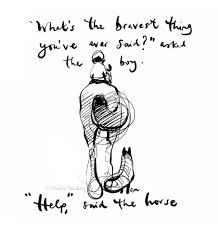
I love this quote from the brilliant Charlie Mackesy book, The Box, The Mole, The Fox & The Horse. It sums it up perfectly.
The Business Case for Being Open
For those who need harder evidence that vulnerability isn’t just touchy-feely nonsense, the research is compelling. Jim Collins’ work on Level 5 Leadership identified a paradoxical blend of personal humility and professional will as the hallmark of leaders who transformed good companies into great ones. These leaders weren’t ego-driven charismatic figures. They were often quiet, self-effacing people who channelled their ambition into organisational success rather than personal glory.
The humility Collins describes is a form of strategic vulnerability. It’s the willingness to admit mistakes, to surround yourself with people smarter than you, to ask for help, and to give credit away. This isn’t weakness - it’s the confidence to be honest about your limitations.
Amy Edmondson’s research on psychological safety provides another angle that we have referenced previously and rightfully gets a lot of airtime in modern psychology. Edmondson found that high-performing teams aren’t those where people never make mistakes. They’re teams where people feel safe admitting mistakes, asking questions, and challenging the status quo. And that safety is created primarily through leader behaviour. When leaders model this - admitting their own errors, acknowledging uncertainty, asking for input - they create permission for others to do the same.

The mechanism is straightforward. Innovation requires risk-taking. Risk-taking requires the possibility of failure. If failure is punished or hidden, innovation dies. Strategic vulnerability from leaders signals that intelligent failure is acceptable, even valuable.
Brewdog’s CEO James Watt is a case in point. When employees went public with allegations about toxic workplace culture, Watt could have gone defensive. Instead, he issued a lengthy, detailed apology that acknowledged specific failures in his leadership. “We are going to reach out to past team members… to learn more and find resolution,” he wrote. “I know there is much work to be done and we are committed to doing it.”
Whether you believe the subsequent changes were genuine or performative is debatable. But the initial response demonstrated strategic vulnerability at scale. He didn’t just issue a bland corporate apology. He got specific about failures, acknowledged the emotional impact on staff, and committed to measurable changes.
Contrast this with the countless leaders who, when faced with criticism, immediately become defensive, deflect blame, or issue non-apology apologies that reframe legitimate grievances as misunderstandings. Strategic vulnerability says “I got this wrong.” Defensive leadership says “You’ve misunderstood what I was trying to do.”
Oprah Winfrey, another figure I reference in my book, built an empire partly on strategic vulnerability. Her willingness to discuss her own struggles - with weight, with past trauma, with self-doubt - created profound connection with audiences. But notice the strategy: she never disclosed in real-time. She processed privately, often with therapists, then chose what to share, when, and in what context. The vulnerability was genuine but not reckless.
The ROI of admitting you don’t know is often underestimated. When leaders pretend to have certainty they don’t possess, several things happen. First, they make worse decisions because they’re operating on incomplete information whilst pretending they have complete information. Second, they create a culture where others also pretend to know more than they do, compounding the problem. Third, they miss opportunities to tap into the collective intelligence of their teams.
In contrast, the leader who says “I don’t know, what do you think?” or “I’m uncertain about this, help me think it through” gains access to insights they’d otherwise miss. They also model the intellectual humility that allows organisations to learn and adapt.
The difference between confidence and arrogance becomes clearer. Confidence is “I don’t know, but I can figure it out.” Arrogance is “I already know, don’t question me.” Strategic vulnerability enables the former whilst exposing the hollowness of the latter.
Philosophical Foundations
The concept of strategic vulnerability isn’t new, even if the language is. Philosophers have grappled with the tension between strength and exposure for centuries. Emmanuel Levinas argued that ethics itself is fundamentally about vulnerability to the Other. When we encounter another person, we’re called into ethical responsibility precisely because we’re exposed to their suffering, their needs, their claims upon us. Levinas’ concept of the “face-to-face” encounter suggests that genuine ethical behaviour requires dropping our defences and allowing ourselves to be affected by others.
This might sound abstract, but it has direct implications for leadership. Leaders who maintain emotional distance, who refuse to be moved by the struggles of those they lead, might be efficient managers but they’re not ethical leaders. Strategic vulnerability is the mechanism that allows leaders to remain emotionally present without being overwhelmed.
To come back to Paul Ricoeur’s work, his ideas on narrative identity offer another angle. Ricoeur suggested that we understand ourselves through the stories we tell about our lives. These narratives include both our capabilities and our limitations, our successes and our failures. Strategic vulnerability allows leaders to construct honest narratives rather than heroic fictions.
When leaders only tell stories of triumph, they create distance. When they include stories of failure, struggle, and uncertainty, strategically chosen and carefully framed, they create connection. This isn’t about turning every team meeting into group therapy. It’s about acknowledging that leadership is a human activity, undertaken by humans who are simultaneously capable and limited.

Alasdair MacIntyre’s concept of “dependent rational animals” challenges the myth of the independent, self-sufficient individual. MacIntyre argues that humans are fundamentally interdependent because we need each other throughout our lives, not just in infancy or old age. Vulnerability isn’t a temporary state to be overcome; it’s a permanent condition of human existence.
“To care is to acknowledge both the other’s dependence and one’s own dependence and to act accordingly. To care is not to surrender one’s autonomy but to recognize the importance of one’s relationship to another or to others and to respond in the light of that recognition. It is in this light that we should understand the derivation of the English word ‘care’ from the Gothic word Kara, which means ‘to lament.’ So caring is not what a powerful person gives to a weaker one. Caring is a matter of being there, lamenting right along with the person who laments. And we should notice too that the word lament includes not just expressions of distress, but also a deep concern for a threatened good.” Alasdair MacIntyre
This reframes strategic vulnerability from a leadership technique to an acknowledgement of reality. Leaders who pretend to be self-sufficient aren’t just performing; they’re lying about what it means to be human. Those who acknowledge their dependence on others, their need for support and input, their inability to know or do everything alone, are simply being honest about the human condition.
We need a practice of chosen availability, deciding when and how to be open, rather than remaining perpetually defended or indiscriminately exposed.
The Dark Side
This can be powerful, which means it can also be dangerous. It’s psychic dynamite all over again. Not every context rewards openness. Not every relationship can handle it. And not everyone who appears vulnerable is acting strategically rather than manipulatively.
Context matters enormously. The same admission that builds trust in one setting can destroy it in another. Admitting uncertainty during a brainstorming session creates psychological safety. Admitting uncertainty whilst making redundancy decisions creates panic. The leader who can’t distinguish between these contexts will do damage with their vulnerability.
Power dynamics complicate everything. When a CEO admits uncertainty, it can humanise them and create connection. When an entry-level employee admits the same uncertainty, it can be weaponised against them in performance reviews. Leader vulnerability is not the same as subordinate vulnerability, and pretending otherwise is naive.
I’ve seen this play out repeatedly in schools. A principal who admits “I’m not sure how to handle this situation, what do you think?” can create productive dialogue. A newly qualified teacher who says the same thing to their line manager might find it noted as evidence of inadequate capability. The power differential changes what vulnerability signals.

Gender complicates this even further. Research consistently shows that men and women face different consequences for displaying vulnerability in professional settings. Male leaders who admit uncertainty are often seen as admirably humble. Female leaders who do the same are more likely to be seen as incompetent. This isn’t right, but it’s real, and strategic vulnerability requires acknowledging these dynamics rather than pretending they don’t exist.
Cultural context matters too. The level of vulnerability considered appropriate varies dramatically across cultures. What reads as refreshingly honest in one cultural context might read as inappropriately intimate in another. Leaders working across cultural boundaries need to calibrate their vulnerability accordingly.
There’s also the risk of vulnerability being weaponised in toxic organisational cultures. I’ve witnessed environments where any admission of limitation is immediately used against you. In these settings, strategic vulnerability isn’t strategic; it’s career suicide. The honest thing to acknowledge is that some organisations are too broken for vulnerability to be safe, and in those contexts, self-protection isn’t weakness.
The Vulnerability Audit
Before disclosing anything personal or admitting any limitation, run it through a simple audit. Ask yourself six questions:
What’s my intention?
Am I trying to build connection, model openness, create psychological safety, or solve a problem? Or am I seeking attention, avoiding accountability, or filling an awkward silence? If your primary beneficiary is yourself rather than the relationship or the work, reconsider.
Who benefits from this disclosure?
Will this information help others, or does it burden them? Will it create permission for collective problem-solving, or will it create anxiety they can’t do anything about? The headteacher who shares her uncertainty about AI policy creates productive dialogue. The headteacher who shares her existential crisis about whether teaching matters creates unnecessary anxiety. Leave that to those of us who don’t need the salary that the classroom pays!
What’s the appropriate level of detail?
You can acknowledge a struggle without providing a complete backstory. “I’m working through some family challenges at the moment” might be sufficient. “Let me tell you about my mother’s diagnosis and what it’s bringing up about my childhood” is probably too much. Strategic vulnerability is about sufficient disclosure for the purpose at hand.
Is this the right context and audience?
A one-to-one conversation with a trusted colleague can handle more vulnerability than an all-staff meeting. A team you’ve worked with for years can handle more than a group you’ve just met. Different relationships have different capacities for vulnerability at different times.
Am I seeking to solve or simply to share?
Sometimes we need to process, and that’s legitimate. But processing should happen with appropriate people like therapists, close friends, trusted confidants. Not with direct reports who can’t say no to listening. Not in professional contexts where others are looking to you for direction. Share with people who have the capacity and consent to hold what you’re sharing.
What boundaries need to remain in place?
Strategic vulnerability doesn’t mean unlimited access to your inner life. You can be open about struggling without detailing every struggle. You can admit uncertainty without dissolving into self-doubt in front of your team. Clear boundaries actually enable vulnerability because they contain it, making it safe rather than overwhelming.
The concept of “graduated vulnerability” helps here. Start small. Share something relatively low-stakes and gauge the response. If it’s received well like if people reciprocate, if trust deepens or if psychological safety increases, you can share more. If it’s weaponised, dismissed, or creates discomfort, you know to maintain stronger boundaries in that relationship or context.
This isn’t about being calculating in a manipulative sense. It’s about being thoughtful. It’s recognising that vulnerability is powerful and therefore requires care in its deployment.
Creating containers for vulnerability also matters. Regular team retrospectives, structured feedback sessions, or established one-to-one meetings provide appropriate contexts for more open sharing. These containers signal “this is a time and space where we can be more vulnerable together.” Outside those containers, different norms apply.
Strategic Vulnerability in Action
Let me ground this in some concrete examples from my own work, because theory without practice is just philosophy, and we need more than that (however much I love it and wish it were enough!) Over 300 episodes of the Edufuturists podcast, I’ve had to navigate strategic vulnerability constantly. When interviewing guests about challenging topics - mental health, educational failure, professional setbacks - I’ve found that sharing a small, relevant piece of my own experience early in the conversation creates permission for them to go deeper. Not sharing my entire mental health history, just a brief acknowledgement that I’ve navigated similar terrain.
This has consistently produced richer, more honest conversations. Guests who might have stayed in professional-speak mode instead share genuine struggles and hard-won insights. The vulnerability is strategic because it serves the conversation and ultimately serves the listeners who benefit from that honesty.
In my writing, I’ve made deliberate choices about what to disclose and when. The numerous pieces on my layered identity were deeply personal but served a clear purpose: helping others understand the complexity of identity and the process of self-discovery. I included specific details about my AuDHD diagnosis, my faith deconstruction, my mental health journey not because I needed to confess but because those details might help readers facing similar questions.
But I’ve also chosen what not to share. Some parts of my story remain private because sharing them wouldn’t serve otherS. It would only satisfy some curiosity or create unnecessary concern. Planned vulnerability includes strategic privacy.
In client work helping organisations develop psychological safety, I often start workshops with a carefully calibrated admission. Something like: “I’m going to be honest, creating genuine psychological safety is really difficult and I don’t have a perfect formula for it. What I do have is some frameworks we can work through together, and I’m genuinely curious what will work in your specific context.”
This usually shifts the energy immediately. Teams relax. They stop expecting me to have all the answers and start bringing their own intelligence to the problem. The admission of limitation paradoxically increases their confidence in my ability to help them, because I’m being realistic rather than selling snake oil.
When teaching teams to be strategically vulnerable, I emphasise the difference between confession and connection. Confession is “let me tell you all my problems.” Connection is “I’ve struggled with this too, let’s figure it out together.” The first creates dependency; the second creates partnership.

The Courage to Be Incomplete
There’s a false dichotomy that haunts modern leadership thinking. We’re told we must choose between being strong and being vulnerable, between projecting confidence and admitting uncertainty, between appearing competent and acknowledging limitations.
This is nonsense (and that’s me being polite!)
The most effective leaders I’ve encountered - the ones who build thriving teams, who navigate uncertainty well, who create organisations that learn and adapt - are those who’ve integrated both. They’re strong enough to be vulnerable. They’re confident enough to admit uncertainty. They’re competent enough to acknowledge their limitations. This integration requires moving beyond either/or thinking. It’s not strength versus vulnerability. It’s strength through vulnerability. The leader who can say “I don’t know, let’s figure it out together” isn’t weak but instead they’re modelling the kind of intellectual humility and collaborative problem-solving that organisations desperately need.
My own journey has been one of gradual integration. The decision to be open about my mental health challenges. Then ADHD. Then autism. Then faith deconstruction. Then the complexity of my origin story. Each disclosure has been a small act of choosing wholeness over performance, connection over protection. But integration doesn’t mean indiscriminate disclosure. I haven’t shared everything. Some things remain private because they should. The goal isn’t radical transparency; it’s strategic authenticity. Being honest about who you are whilst maintaining appropriate boundaries about what you share, with whom, and when.
The future needs leaders who are comfortable with uncertainty precisely because uncertainty is the only certainty we have. The ground keeps shifting. Technologies evolve. Societal expectations change. What worked yesterday might not work tomorrow. In this context, the leader who pretends to have everything figured out is delusional at best, dishonest or manipulative at worst.
We need the kind of capability that allows leaders to navigate this uncertainty honestly. It says: I don’t know everything, and that’s okay. I’ll make mistakes, and I’ll own them. I need help, and I’ll ask for it. I’m limited, and I’m honest about those limitations. And despite all of that, or perhaps because of it, I can still lead us forward. What would change in your organisation if you admitted you don’t have it all figured out? What conversations would become possible? What collaborative problem-solving might emerge? What psychological safety might develop?
The courage to be incomplete is about acknowledging that completeness is an illusion, and that our humanity with all its limitations is actually our greatest leadership asset.
Strategic vulnerability is the bridge between who we pretend to be and who we actually are. Walking that bridge requires courage, certainly. But it also requires something else: the wisdom to know that the other side isn’t weakness. It’s connection, authenticity, and the kind of leadership our complex, uncertain world desperately needs.

Key Takeaways
1. Strategic vulnerability requires intention, not just confession so know why you’re sharing before you share
2. Context determines appropriateness so what builds trust in one setting destroys it in another. Choose wisely, Padawan!
3. Model intellectual humility as leadership strength. “I don’t know” can be the most powerful thing you say.
4. Protect yourself first because vulnerability without boundaries is recklessness, not courage
5. Distinguish between connection and performance. Authentic vulnerability serves others, performative vulnerability serves ego
So as you navigate this challenge of when to be open, when to bring another part of your self into the light, remember that strength and vulnerability aren’t opposites and the most powerful leaders integrate both.
Further Reading
Discover more interesting articles here.