There's a Californian post-hardcore band called Pierce the Veil. I'm not about to pretend I know their back catalogue, but I've always liked the name more than the music. It's borrowed, whether the band knew it or not, from somewhere much older.
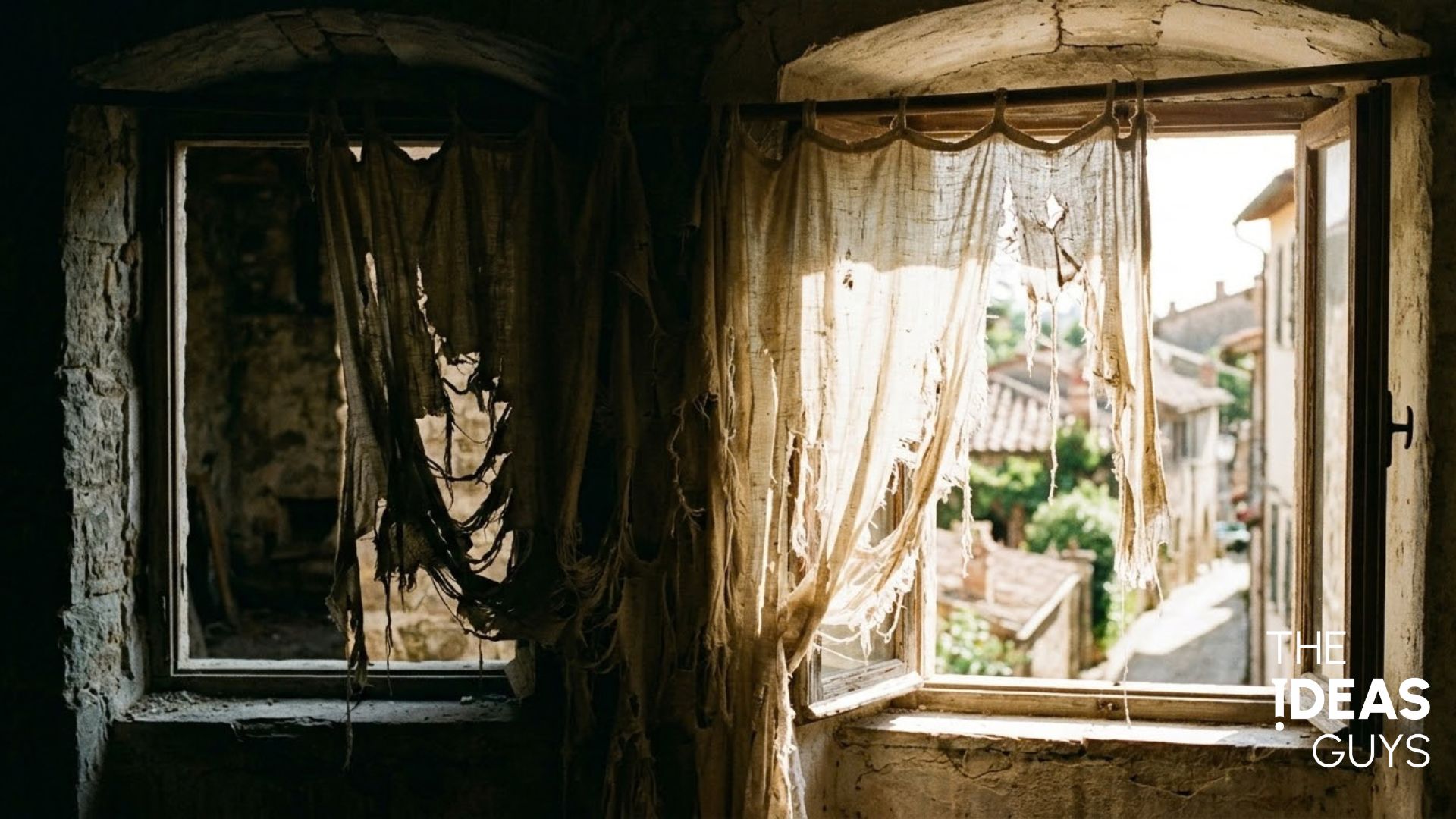
In the Gospel of Matthew in the Bible, at the moment of crucifixion, the curtain of the temple "was torn in two from top to bottom." That veil hadn't been decorative. It marked the boundary between the sacred and the ordinary, the priesthood and everyone else, what could be known and what couldn't. When it tore, the boundary didn't just move. It stopped existing.
Marriage has its own veil, worn for centuries and still walked down aisles today, lifted at the point a stranger becomes known. Both veils do the same job before they're pierced: they hold two things apart. Access and exclusion. Mystery and understanding. What we're permitted to see, and what we're not.
I want to borrow that image for something less sacred and considerably more mundane: the way we think, question, and refuse (or fail) to look behind what's put in front of us.
This isn't a piece about having answers. If anything, it's the opposite. It's the closest I've come to setting out what I actually think I'm for, after years of keynotes, question cards, and a book built entirely around asking better questions. I don't have a system that guarantees the right answer. What I have is a bias: don't trust the version you've been shown until you've gone looking for what's behind it.
But there’s a twist, because there's always a twist with veils. The most common way we avoid piercing one isn't by refusing to look. It's by convincing ourselves that looking at the next thing counts as looking behind the curtain at all. Chasing the next tool, the next trend, the next transformation programme feels like progress. Often it's just redecorating the veil. Same curtain, new pattern.
So this is a manifesto, in the proper sense: a public declaration of where I stand. Not on the side of certainty. On the side of pulling back the curtain, even when - especially when - what's behind it is less comfortable than what was painted on the front.
The Convenient Truth
Most organisations don't need an Al Gore documentary to reveal an inconvenient truth. They need to stop defending a convenient one.

As I mentioned in The Agent Problem, for the best part of two decades, the Post Office knew, or had every reasonable means to know, that its Horizon accounting system was capable of generating phantom shortfalls. Hundreds of subpostmasters were prosecuted, many imprisoned, on the strength of data the organisation had every reason to doubt. The institution wasn't short of evidence. It was short of incentive to look behind its own curtain. Admitting the fault meant admitting liability, reputational damage, and the quiet horror of having ruined lives on the back of a story everyone found easier to believe than question.
That's the mechanism behind every convenient truth, at whatever scale. It isn't stupidity, and it isn't usually malice. It's the simple, human preference for a story that doesn't require us to rebuild anything. A FRiDEAS piece I wrote on permission-based thinking covered why organisations train their people to stop asking "why do we do it this way?" (Ignorance, Cats and Survival). This is the sequel question. Once you've found your nerve to ask, what do you do with what's underneath?
I see a smaller-scale version of this constantly in education settings. A behaviour policy that everyone privately knows disadvantages a particular group of pupils. An assessment system kept running because changing it would mean admitting three years of data were built on shaky foundations. A SEND provision model defended not because anyone believes it's working well, but because the alternative means acknowledging how much needs to change, and nobody currently has the capacity or the appetite for that conversation. None of this is cartoonish villainy. It's ordinary institutional self-protection, dressed up as stability.
I think I know why (and I say know tentatively, which is ironic in and of itself, of course!). Piercing the veil doesn't feel like triumph. It feels like loss, at first. You lose the comfort of the shared story. You lose the ease of going along with colleagues who haven't looked yet. You often lose standing, because the people maintaining the convenient version rarely thank you for puncturing it.
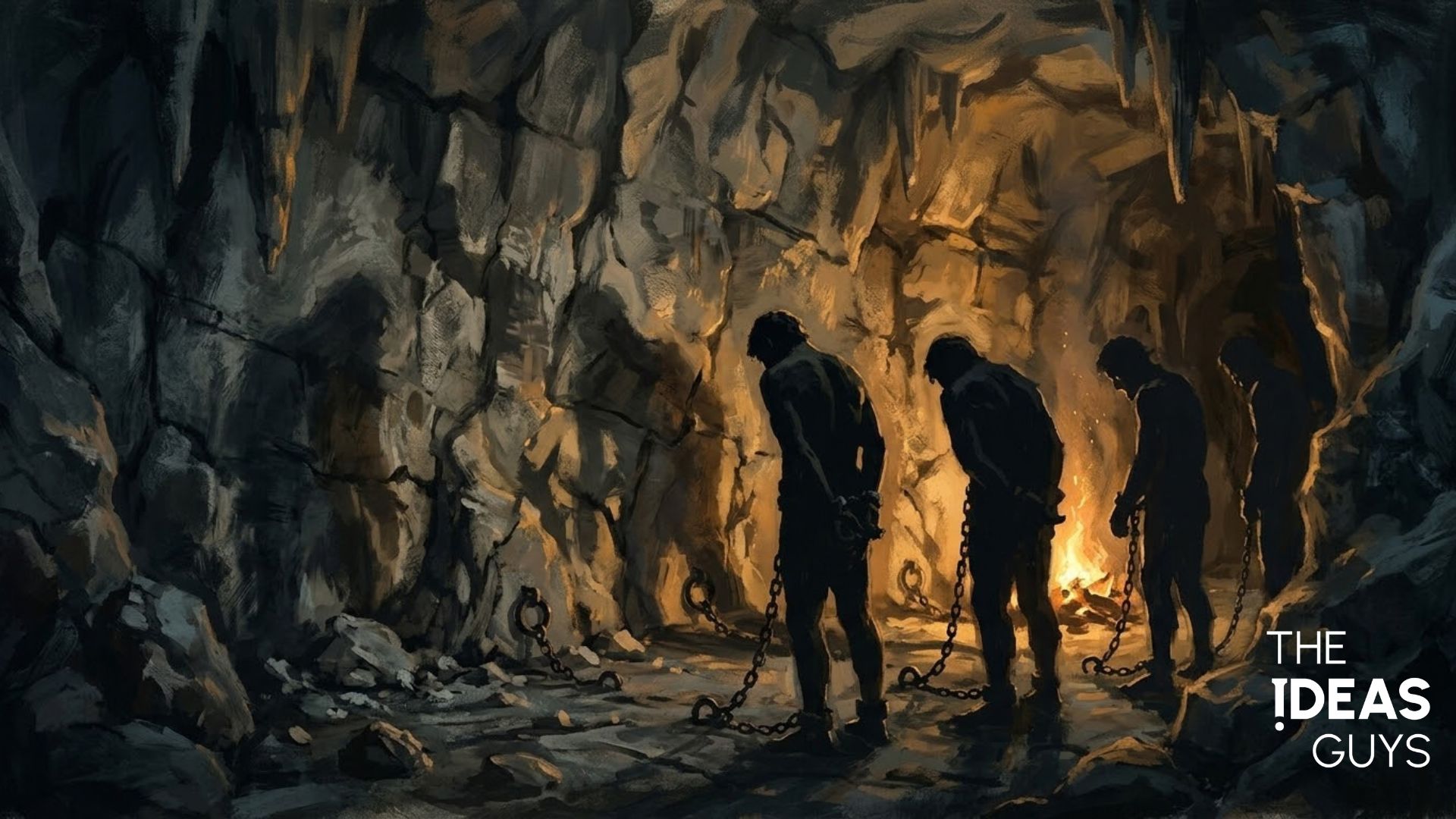
Plato's Cave
Twenty-four centuries before anyone wrote a word about psychological safety, Plato gave us the clearest account we still have of why people resist being shown the truth. In the Republic, he describes prisoners chained in a cave since childhood, facing a wall, watching shadows cast by a fire behind them. The shadows are all they've ever known, so the shadows are reality. Then one prisoner is freed, dragged out into the sunlight, and forced to look directly at what had only ever been reflected. The process is agonising. His eyes hurt. He wants to go back to the shadows, because the shadows, at least, were legible.
When he returns to tell the others what he's seen, they don't thank him either. Plato is blunt about what happens next: the freed man is mocked, and in the darkness of the cave, his newly adjusted eyes are now worse at reading shadows than the people who never left. Seeing more clearly makes you temporarily less fluent in the world you've left behind.
This is worth sitting with before romanticising "thinking differently" any further. The pierced veil doesn't arrive with a neat burst of clarity and a round of applause. It arrives with disorientation, loss of fluency, and a strong, understandable urge in everyone around you to drag you back to the shadows, where everyone can still agree on what they're looking at.
There's a version of this I'd wager most readers have lived through directly, even if the cave had carpet tiles rather than stone. You join a new organisation, or step into a new role, and for the first few weeks you see everything with uncomfortable clarity. Why does nobody question that process? Why is that meeting still happening? What the heck is a course file? (Inside joke for my Burnley College colleagues!) Within a few months, the clarity fades. Not because the problems resolved themselves, but because you've been quietly re-chained, facing the same wall as everyone else, fluent again in reading shadows. Plato would say that's not a failure of will. It's what the cave does to everyone who stays in it long enough.
The Veil You Didn't Know You Were Wearing
Plato's cave is about a veil imposed from outside. Arthur Schopenhauer's is more unsettling, because it's a veil none of us can take off.
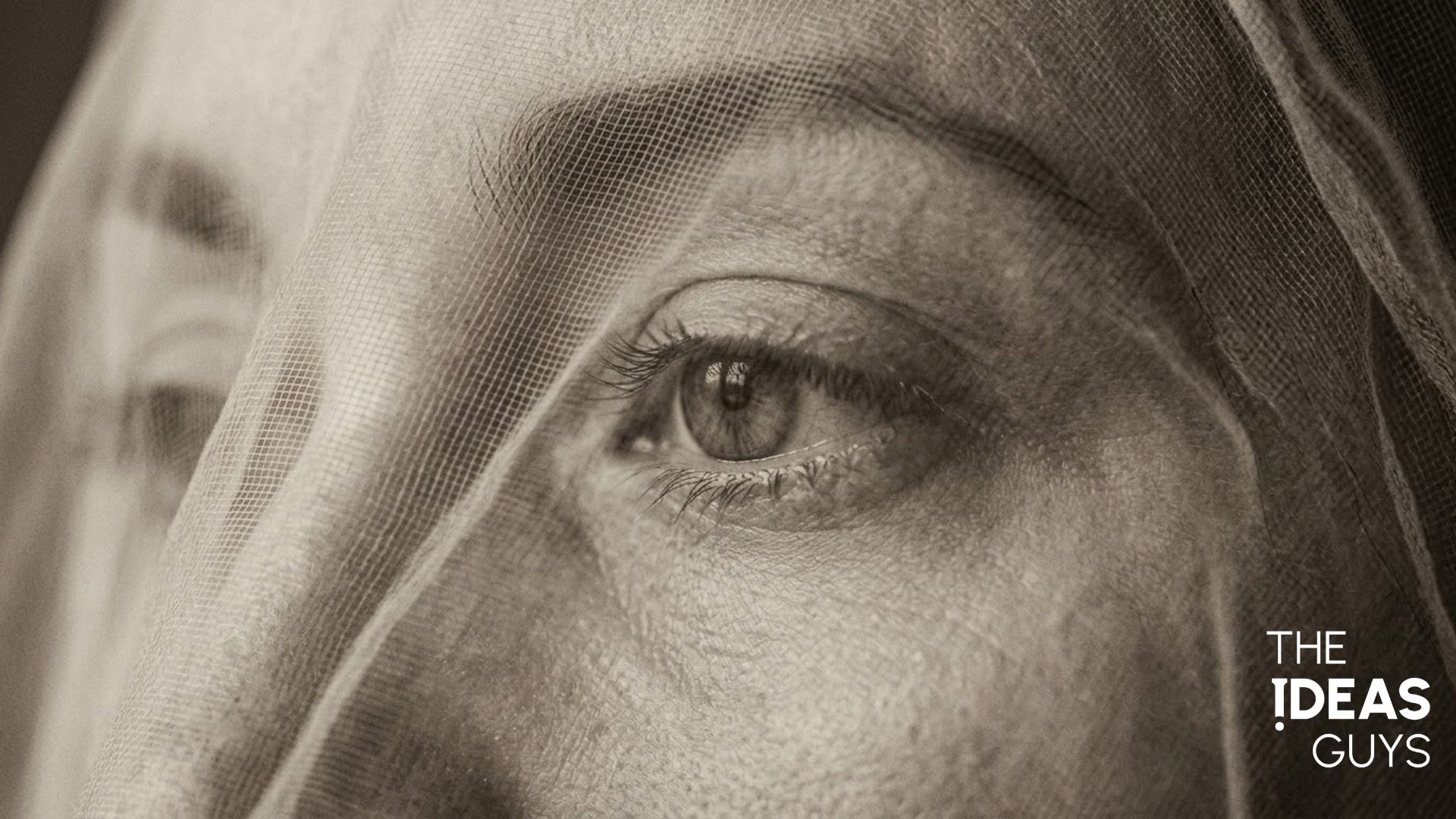
Schopenhauer opens his major work with a line that still unsettles anyone who reads it properly: "The world is my representation." His point wasn't solipsism (the philosophical idea that only your own mind is sure to exist, and anything outside of it cannot be proven). It was that none of us has direct access to the world as it is. We only ever get the version our senses and categories construct for us, a version he borrowed Hindu philosophy's language to call the veil of maya. Not a lie exactly. A rendering.
This matters for a manifesto about thinking differently because it closes off the easiest escape hatch. It's tempting to believe the veil is always something other people put up, institutions, convenient narratives, bad incentives. Schopenhauer's point is that your own perception is doing some of the veiling too. Your frame, your categories, your assumption about which questions are even sensible to ask, these were all built before you had any say in the matter, mostly by people who had their own convenient truths to protect.
Thinking differently, properly understood, isn't just about refusing the official story. It's about distrusting the story your own mind hands you first, automatically, before you've even noticed there was a choice.
That distrust has to be practised, not just agreed with in principle. It's one thing to nod along to the idea that perception is constructed. It's another to catch yourself mid-judgement, in a staff meeting or a planning conversation, and ask whether the conclusion you've just reached arrived because of the evidence in front of you, or because of the frame you brought into the room before the evidence ever got a chance. Most of us never ask. We experience our own veil as simply "how things are," which is precisely what makes it a veil rather than an opinion.
The Next, Next, Next Trap
I think most writing on "innovative thinking" quietly betrays its own premise as it tells you to question everything, then hands you the answer: adopt the new platform, chase the emerging trend, be the first to the next big thing. I have been guilty of this myself. Indeed, you could argue I am doing the same thing in this piece!
That isn't piercing the veil. It's upholstering it.

Novelty is comfortable precisely because it looks like courage without costing you anything you actually value. You can announce the new tool, the new initiative, the new framework, and be applauded for progressiveness, all without once disturbing the paradigm underneath. The org chart stays the same. The incentives stay the same. The question nobody wants asked stays unasked. You've simply added a new shadow to the wall.
Barry Marshall didn't do any of that. In 1984, convinced that stomach ulcers were caused by bacteria rather than stress, and unable to get the medical establishment to take the idea seriously, the Australian doctor cultured a sample of Helicobacter pylori and drank it. He developed gastritis within days, proving his point on his own body because nobody would fund the alternative. It took the best part of a decade before the profession properly listened.
Looking back, Marshall put it plainly,
"When I said they were there, no one believed it." Barry Marshall
Not because his idea was exotic or cutting-edge. It was the opposite. It was boringly, inconveniently simple, and it embarrassed an entire field's confident certainty. He won the Nobel Prize in 2005. For most of the preceding twenty years, he was just the man nobody wanted to be right.
That's what real veil-piercing usually looks like. Not the shiny next thing everyone can safely applaud. The unfashionable, uncomfortable, often tedious insistence that the current story doesn't hold up, delivered by someone with no new platform to sell you.
I watch a version of the next-next-next trap play out constantly in conversations about artificial intelligence in education right now. The temptation is to measure progress by adoption: how many tools, how many pilots, how many staff trained on the latest platform. None of that is piercing anything. It's entirely possible to run six AI pilots in a single academic year and never once touch the actual question sitting underneath all of them, which is what you believe learning is for in the first place. The tools change. The unexamined paradigm underneath stays exactly where it was, quietly unbothered, watching the shadows get slightly more sophisticated.
A Method, Not Just a Mindset
So far this has all been diagnosis. Here's a tool built around a 20th Century philosopher (the aforementioned irony notwithstanding!).
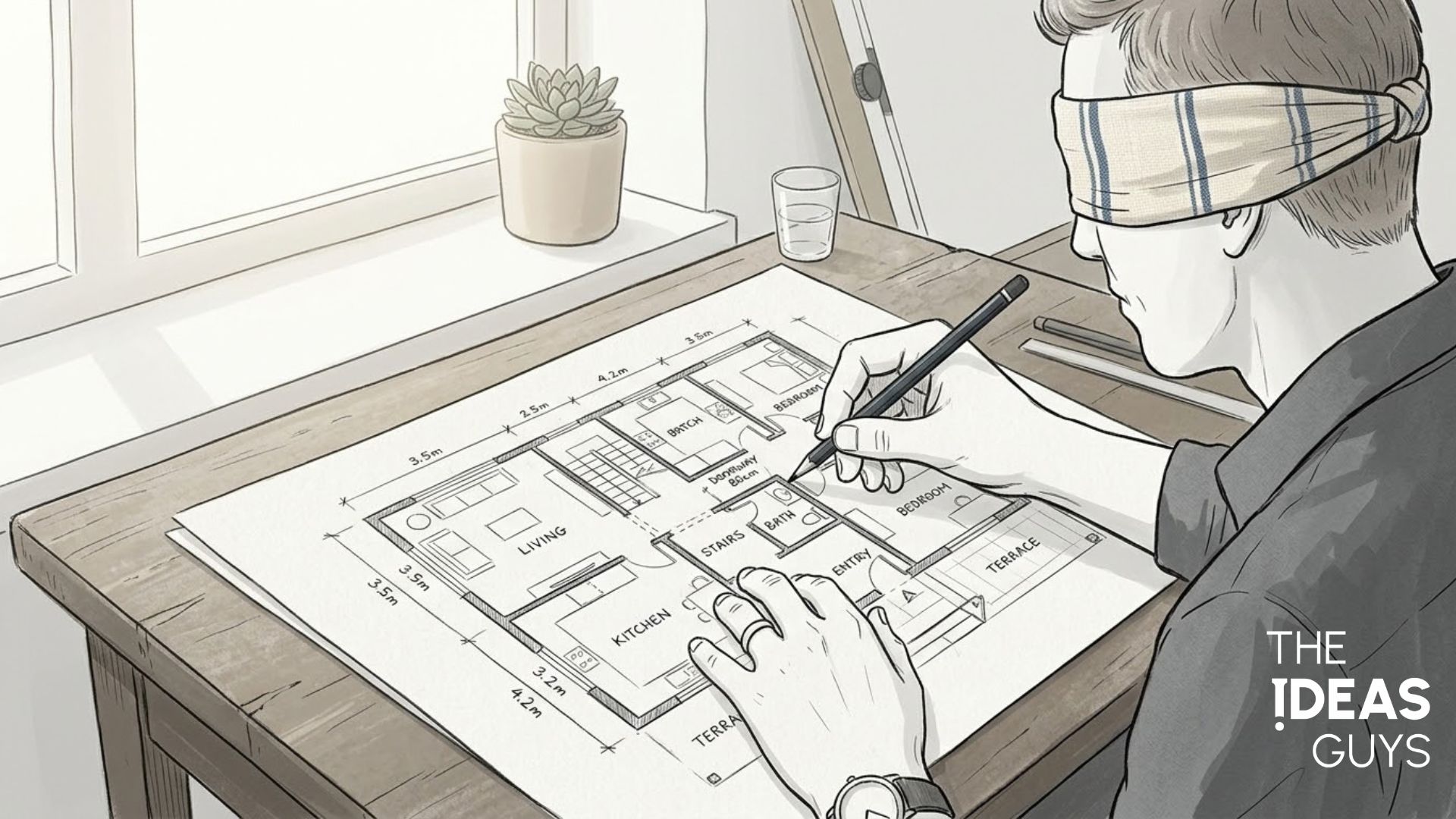
John Rawls built his entire theory of justice around a single thought experiment. Imagine you had to design the rules of a society, but you didn't know in advance which position in that society you'd occupy. Not your class, your health, your talents, your luck. As Rawls put it, imagine the rules are drawn up where "no one knows his place in society, his class position or social status." Design from behind that veil of ignorance, he argued, and you'll design something closer to fair, because you've removed your own stake in rigging the outcome.
“[E]ach person is to have an equal right to the most extensive basic liberty compatible with a similar liberty for others.” John Rawls
You don't need to be writing a theory of justice to use this. Next time your school, your trust, your organisation is defending a policy (an admissions criterion, a behaviour system, a promotion process), try running it through the veil. Would you design it this way if you didn't know whether you'd be the family it serves well or the one it quietly fails? Would you defend it as fiercely if you weren't the person currently benefiting from it staying exactly as it is?
It's a deliberately uncomfortable question to sit with, because most of us are, in some corner of our working lives, benefiting from a veil we'd rather not pierce. Rawls doesn't let you off that hook. Neither should you.
The reason this works as a method rather than just a nice thought experiment is that it forces a very specific kind of honesty. It's easy to say you support fairness in the abstract. It's much harder to sit inside the version of a policy where you're the person it fails, and still defend it. I've used a clumsy version of this in consultancy work for years without having the proper name for it: asking a leadership team to design the policy again, but this time as if they didn't know whether they'd be the teacher/department/leader the system serves well, or the one standing quietly outside it. The policy rarely survives the exercise unchanged.
What Gets Torn Away When Enough People Look
Individual veil-piercing is hard enough. Institutional paradigm shifts are harder, because they require enough people to look behind the same curtain at roughly the same time.
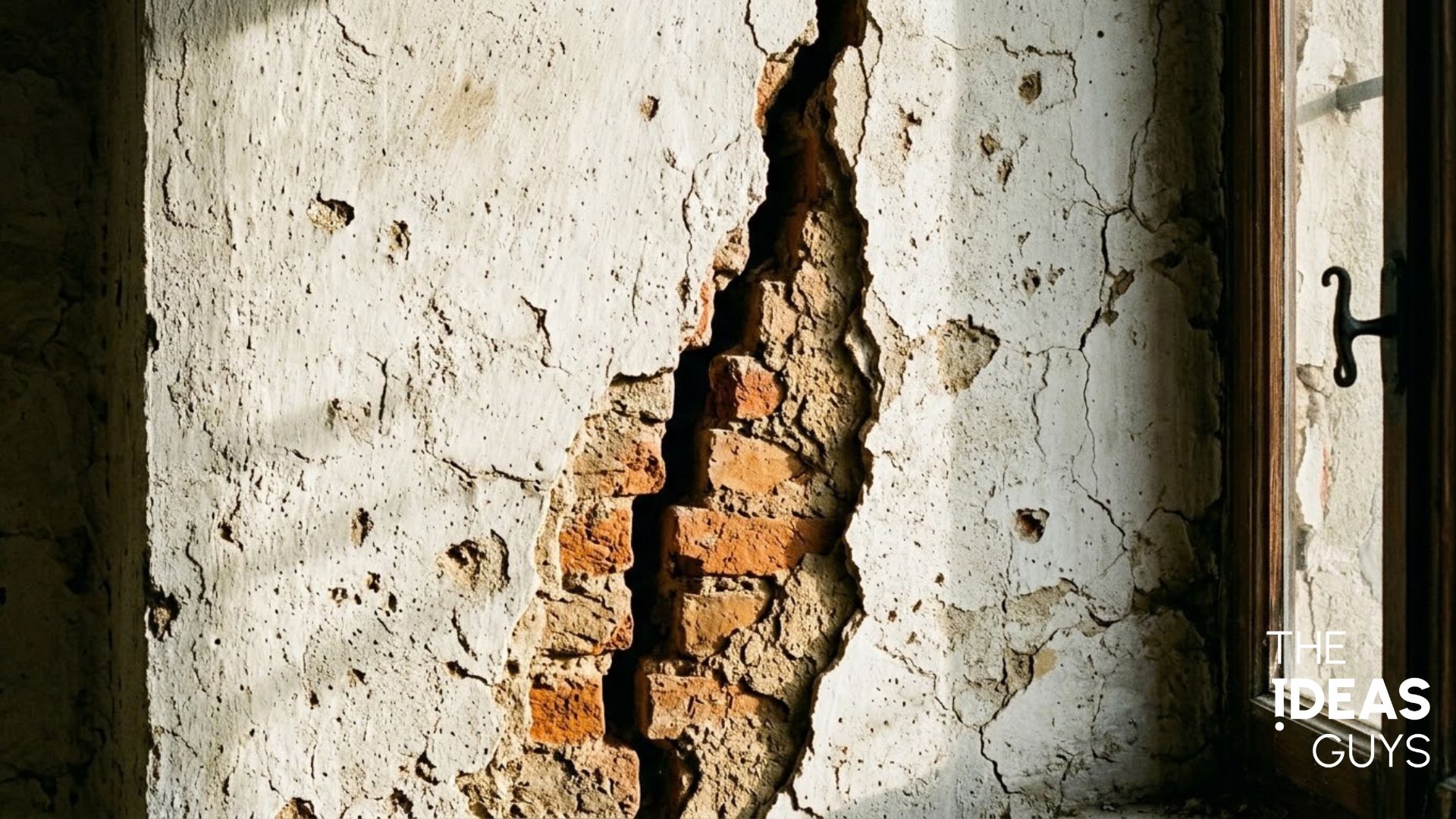
Thomas Kuhn's account of how science actually changes was itself a quiet revolution. Scientific progress, he argued, isn't a steady accumulation of better facts. It proceeds through long periods of "normal science," where the dominant paradigm is treated as settled, punctuated by crises when enough anomalies pile up that the paradigm can no longer hold. Kuhn's own words capture the scale of what's really at stake,
“When paradigms change, the world itself changes with them." Thomas Kuhn
I've written elsewhere about Kuhn (Iteration in a Lab Coat and Christensen’s Disruptive Innovation Model) as well as why organisational success so often becomes the very thing that blocks an organisation's next evolution (The Biggest Barrier to Success is Success). The two ideas sit together neatly. A paradigm that has delivered success becomes sacred precisely because it worked. Challenging it doesn't just feel risky, it feels ungrateful. So the anomalies get explained away, filed as exceptions, managed around, right up until they can't be any longer.
The veil, at institutional scale, is rarely torn by a single visionary moment. It's torn when enough people, independently, stop being willing to file the anomaly away one more time.
What's worth noticing is how long that can take, and how little it has to do with the quality of the evidence. Kuhn made the point that scientists operating within a paradigm aren't being deliberately dishonest when they explain away an anomaly. They're doing exactly what their training taught them to do: trust the paradigm first, and treat contrary evidence as the thing needing explanation. The same pattern shows up everywhere a profession, a sector, or an organisation has built genuine expertise around a particular way of seeing. The expertise itself becomes the veil. It's very hard to notice a curtain you helped to hang.
Where I Stand
I'm well aware that a certain Californian company trademarked a two-word slogan about thinking differently a few decades ago. This isn't that, and I wouldn't want it to be. A slogan promises an answer wrapped in a full stop. I'm not offering one.
What I am setting out, as plainly as I can, is the conviction behind every keynote, every question card, every piece of consultancy work I've done. The veil is rarely torn by the person with the better answer. It's torn by the person who refuses to accept the one they've been handed, and who keeps refusing, long after refusing stops being comfortable or fashionable.
That has consequences for how I think this work should actually be done, inside organisations and inside your own head. It means resisting the urge to arrive with a finished framework and a confident diagnosis. It means being more interested in the question nobody in the room wants to ask than in the answer everybody's already prepared to give. It means accepting that most of the genuinely useful moments in a room happen after someone says something slightly too honest, and the temperature changes, and everyone has to decide whether to pretend they didn't hear it or actually deal with what's now visible. I'd rather deal with it. I'd rather be the person who asks the next question than the one who supplies the next answer, because answers close curtains and questions open them.
Pierce the Veil, as a band name, borrows something genuinely old. A temple curtain torn at the exact moment it mattered most. A marriage veil lifted the instant two people stop being strangers to each other. Both are images of a boundary that didn't move, slightly, to accommodate a better view. It stopped existing. That's the standard I'd rather be held to than any slogan. Not "think different." Just: don't stop looking behind the curtain, even once you've found something uncomfortable there. Especially then.
Key Takeaways
- The comfortable version of events is rarely a lie, it's usually just the explanation nobody has had the incentive to question yet. What are the incentives you need to ask better questions?
- Seeing more clearly often makes you temporarily worse at functioning in the world you've just left, so expect disorientation before you get clarity. And you might never have clarity as an end point; it might just be greater levels of confidence in a view.
- Your own perception is doing some of the veiling too, so question your instinctive frame as rigorously as you'd question anyone else's. This has become trendy with the phrase ‘unconscious bias’ but it goes beyond racial, gender and privilege as a paradigm.
- Chasing the next tool or trend can feel like progress while leaving the underlying paradigm completely untouched. We don’t need more magpies. We need more lapwings (see future post about this!)
- Remove your own stake from a decision, a miniature version of Rawls' veil of ignorance, which will be become one of the fastest ways to spot an unfair system. What would you do if you didn’t know your future position after your decision?
- Institutional change rarely comes from a single visionary moment, it comes when enough people simultaneously stop excusing the same anomaly. Dissonance doesn’t have to be offensive but it does not to be present.
It would be tidy to end there with a flourish about courage and clarity, but that would be exactly the kind of convenient closing line this piece has been arguing against. So instead, a genuine question. What's the version of events in your organisation, your classroom, your own thinking, that everyone's quietly agreed is too inconvenient to pull back? You don't need my answer. You need your own nerve.
Further Reading
Discover more interesting articles here.