.png)

Chapter 4: The invisible thief that fragments everything
In Parts 1, 2, and 3 of this series, we established that ADHD isn’t a free pass to be a knobhead, that direct communication works better than hints, and that rejection sensitive dysphoria creates emotional landscapes with no middle ground. But there’s another aspect of ADHD that complicates every conversation, every task, and every moment of connection - the constant, relentless distraction. And it’s the challenge that nearly everyone talks about, but hardly anyone understands honestly.
Part 1 : An introduction to Living with ADHD
Part 2: How Amanda learned that subtlety is the enemy of understanding
Part 3: The invisible wound that shapes everything - rejection sensitive dysphoria.
The “curious incident of the email in the night” is one of the most readily available examples when explaining what living with my ADHD distraction actually feels like. Amanda was upstairs packing for our holiday - a task that required focus and organisation. I’d offered to help, but first needed to “just quickly clear a few emails” on my computer. Simple task. Ten minutes, maximum. Then I’d come up and help with the packing.
An hour later, Amanda came downstairs to find me still at my computer. The emails were open, yes, but I was also halfway through updating my LinkedIn profile, having somehow ended up reading an article about productivity (the irony), watching a YouTube video about ADHD that someone had sent me weeks ago, and researching whether we needed travel insurance for the holiday - which spiralled into comparing different policies, reading reviews, and getting lost in the terms and conditions.
“Are you coming to help?” Amanda asked, not angrily at first, just confused. “I thought you were just clearing emails?”
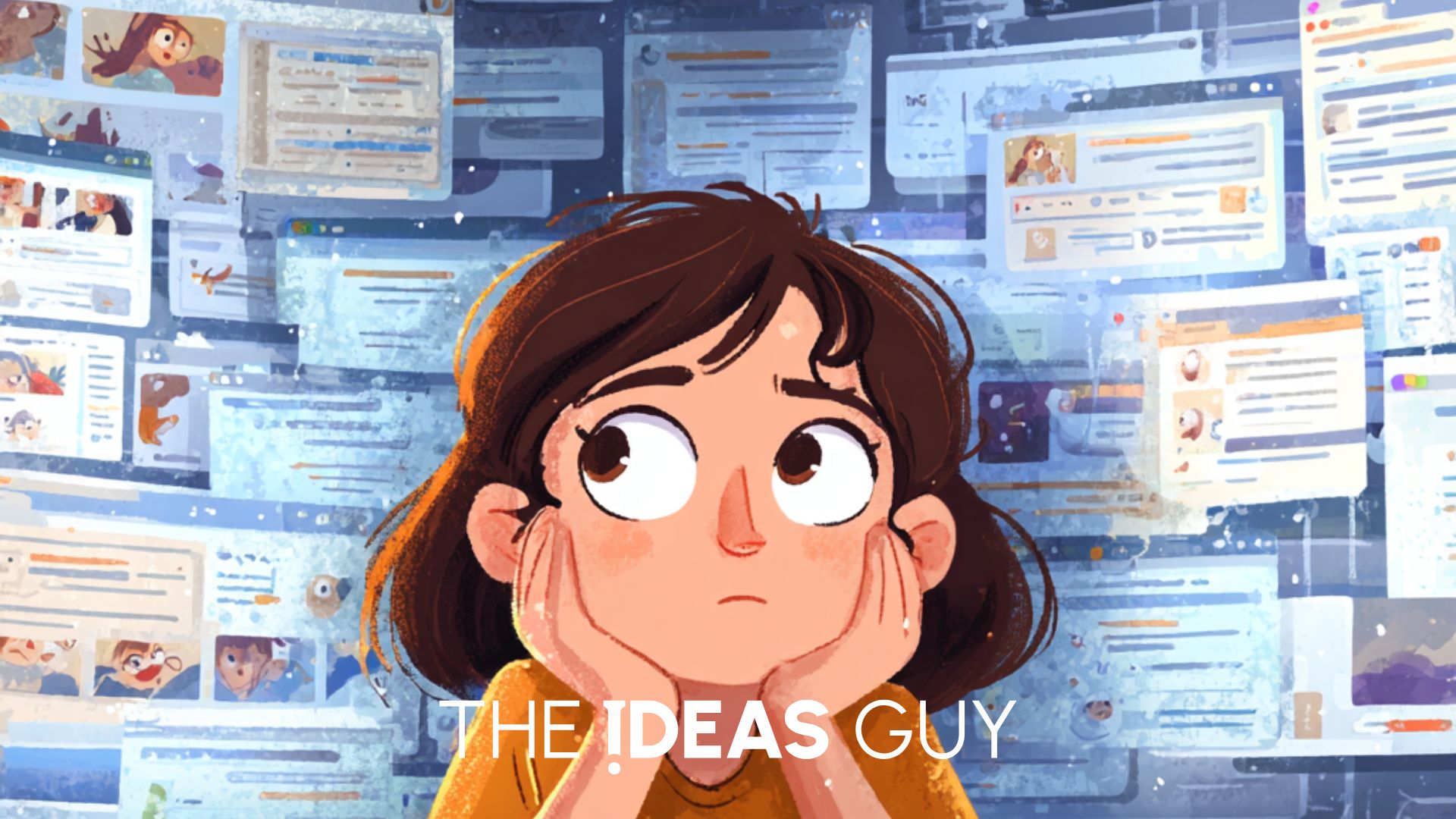
I looked up, genuinely bewildered. “I… I was. I am. I just saw this message about LinkedIn and then there was this article and I remembered we might need insurance and—”
This wasn’t deliberate. I hadn’t decided to ignore the packing in favour of these tasks. My brain had simply… redirected. Multiple times. Without my conscious permission. Each distraction felt completely logical in the moment, each new task genuinely urgent and necessary. Amanda’s frustration was understandable. From her perspective, I’d said I was doing one simple thing and had instead done five different things that nobody asked for, whilst failing to do either the emails or the packing. It looked like I wasn’t listening, or didn’t care, or was deliberately avoiding helping her.
But from inside my head, it was chaos. Not the fun, creative chaos that people romanticise about ADHD. The exhausting, fragmenting chaos where I genuinely couldn’t hold onto the original task long enough to complete it. My attention had been stolen - multiple times - and I hadn’t even noticed the theft happening.
This chapter isn’t about making excuses for this pattern. As we established in Part 1, explanation isn't an excuse. Instead, it’s about understanding what ADHD distraction actually is, how it affects relationships and daily functioning, and what the messy reality looks like when your brain treats every stimulus as equally important and equally urgent.
What ADHD Distraction Actually Is (And Why It’s Not Just ‘Not Paying Attention’)
Most people think ADHD distraction is just another term for “not focusing properly” or “being easily sidetracked.” It’s not. ADHD distraction is a neurological phenomenon where the brain’s executive function - the bit that’s supposed to filter what’s important from what’s not - doesn’t work properly.
Dr. Russell Barkley, who I quoted in the RSD chapter, explains that ADHD is fundamentally a disorder of executive function. One of the key executive functions is selective attention - the ability to focus on relevant information whilst ignoring irrelevant stimuli. When this function is impaired, everything becomes potentially relevant. Everything demands attention.
“ADHD is not a disorder of knowing what to do, but of doing what you know.” - Dr. Russell Barkley
The key word there is “doing.” My brain knows I should clear the emails. It knows I should help with packing. It knows that’s the priority. But between knowing and doing sits a massive gap where my attention gets hijacked by every other stimulus in the environment.
When I opened my emails, I saw a message about LinkedIn. Most brains would register “LinkedIn notification exists” and continue with clearing emails. My brain went: “LinkedIn! When did I last update my profile? Should probably update that. Oh, this article looks interesting. Productivity tips - I need those! Wait, someone sent me that ADHD video. Better watch it. Actually, do we need travel insurance? Better check. Which companies are best? Let me read these reviews. What’s in the small print? This is important…”
This cascade of attention-stealing isn’t voluntary. I can’t choose to ignore these thoughts any more than I can choose to not hear a loud noise. The stimuli arrive, my brain treats them as priority, and suddenly I’m doing something completely different without having consciously decided to change tasks.
Johann Hari, in his book Stolen Focus (which I’ve written about extensively before), talks about twelve factors that steal our attention in the modern world. But for someone with ADHD, those twelve factors are amplified about a thousandfold. Every notification, every visual stimulus, every passing thought has the potential to completely derail whatever I’m supposed to be doing.
But here’s where it gets complicated: understanding that my distraction is neurological doesn’t eliminate my responsibility for how I respond to it. The initial distraction might be involuntary, but I still have some control over what I do after I realise I’ve been distracted.
When I eventually realised I was researching travel insurance instead of clearing emails, I had a choice. I could stop, acknowledge what had happened, and return to the original task. Or I could continue with the insurance research, telling myself I’d “just finish this first” (which usually means starting three more tasks before returning to the emails).
The philosopher William James wrote about attention being,
“the taking possession by the mind, in clear and vivid form, of one out of what may seem several simultaneously possible objects or trains of thought.” William James
For ADHD brains, that “taking possession” is profoundly difficult. All the objects and trains of thought seem equally worthy of possession, equally urgent, equally important.
Amanda’s Side of the Distraction Experience
Living with someone whose attention is constantly being stolen isn’t just frustrating - it’s emotionally exhausting in ways that most relationship advice never acknowledges honestly. Amanda has had to develop an almost encyclopaedic knowledge of what might distract me and when, whilst maintaining her own sanity and right to expect basic task completion.
“The email thing was almost funny,” Amanda tells me, “except it wasn’t funny when I needed your help with packing and you’d completely disappeared into tasks nobody asked you to do. And it’s not just one incident. It's a pattern. A constant, exhausting pattern.”
This unpredictability creates what I’d call “attention anxiety” - Amanda’s never quite sure whether a simple request will be completed or will somehow spawn seventeen other tasks that nobody wanted. She finds herself constantly managing not just her own tasks but also monitoring whether I’m still on track with mine.

The phrase “it’s like having another child” gets used a lot in ADHD relationships, and Amanda hates it (rightly so). She’s not my mother, and I’m not a child. But she does have to expend mental energy tracking my task completion in ways that wouldn’t be necessary with a neurotypical partner.
“Sometimes I just want to be able to ask you to do something simple without having to check in multiple times, or worrying that you’ve got distracted halfway through,” Amanda admits. “I’m not trying to nag. I’m trying to prevent the chaos that happens when you start something and never finish it.”
And then there’s the flip side - the hyperfocus. When my ADHD brain latches onto something interesting, I can focus on it for hours with an intensity that’s almost supernatural. But this hyperfocus is just as unpredictable and just as disruptive as the distraction.
Amanda has learned to recognise the signs of hyperfocus: I’m completely absorbed, oblivious to time passing, unresponsive to questions or requests. During these periods, I’m essentially unreachable. I’ll miss meals, forget appointments, ignore texts. Not deliberately - I’m just locked into whatever has captured my attention.
“The contrast is bizarre,” Amanda reflects. “One minute you can’t focus on anything for five minutes. The next, you’ve been writing for six hours straight and haven’t noticed I’ve been trying to talk to you. There’s no middle ground. You’re either scattered everywhere or locked into one thing.”
Dr. Edward Hallowell, who has ADHD himself and has written extensively about it, describes this as the “now and not now” problem. ADHD brains struggle with anything that isn’t immediately engaging. If it’s interesting, we hyperfocus. If it’s not, we can’t focus at all. There’s no gentle middle ground of “moderately engaged in a necessary but boring task.”
“In the world of ADHD, there are only two times: there is now, and then there is not now.” Dr. Edward Hallowell
The cognitive dissonance Amanda experiences is unfair and deep. She knows intellectually that my distraction isn’t personal - it’s neurological. But living with the impact of it feels very personal. When I get distracted halfway through a task she asked me to do, it’s hard for her not to feel like I don’t value her requests or our shared responsibilities.
This is where the accountability piece from Part 1 becomes crucial. Amanda has adapted her communication style to work with my attention span (as we discussed in Part 2), but that adaptation can’t mean she becomes my external executive function entirely. There’s a line between accommodation and enabling, and distraction constantly threatens to push us across it.
The Distraction Patterns That Shape Everything
ADHD distraction doesn’t just affect individual moments but it creates patterns that shape entire relationship and life dynamics. In our relationship and household, several specific distraction patterns have emerged over the years.
The Task Multiplication Effect
I rarely complete just one task. Instead, starting one task inevitably leads to discovering (or creating) multiple other tasks. The email incident is typical: one task spawns five or six others, none of which get completed properly.
This isn’t about being thorough or noticing things that need doing. It’s about my brain’s complete inability to filter what’s relevant to the current task from what’s merely interesting or seemingly urgent. Every stimulus along the route to task completion becomes a potential detour.
The irony is that I’m often getting things done - just not the right things. I’m productive in the wrong direction. Amanda comes upstairs to find I’ve updated my LinkedIn profile, watched three videos, researched insurance, and bookmarked seventeen articles… but the emails are still uncleared and the packing remains undone.
“You work so hard at the wrong things,” Amanda observes. “It’s not laziness. You’re exhausting yourself doing stuff. It’s just never the stuff that actually needs doing.”
The Notification Death Spiral
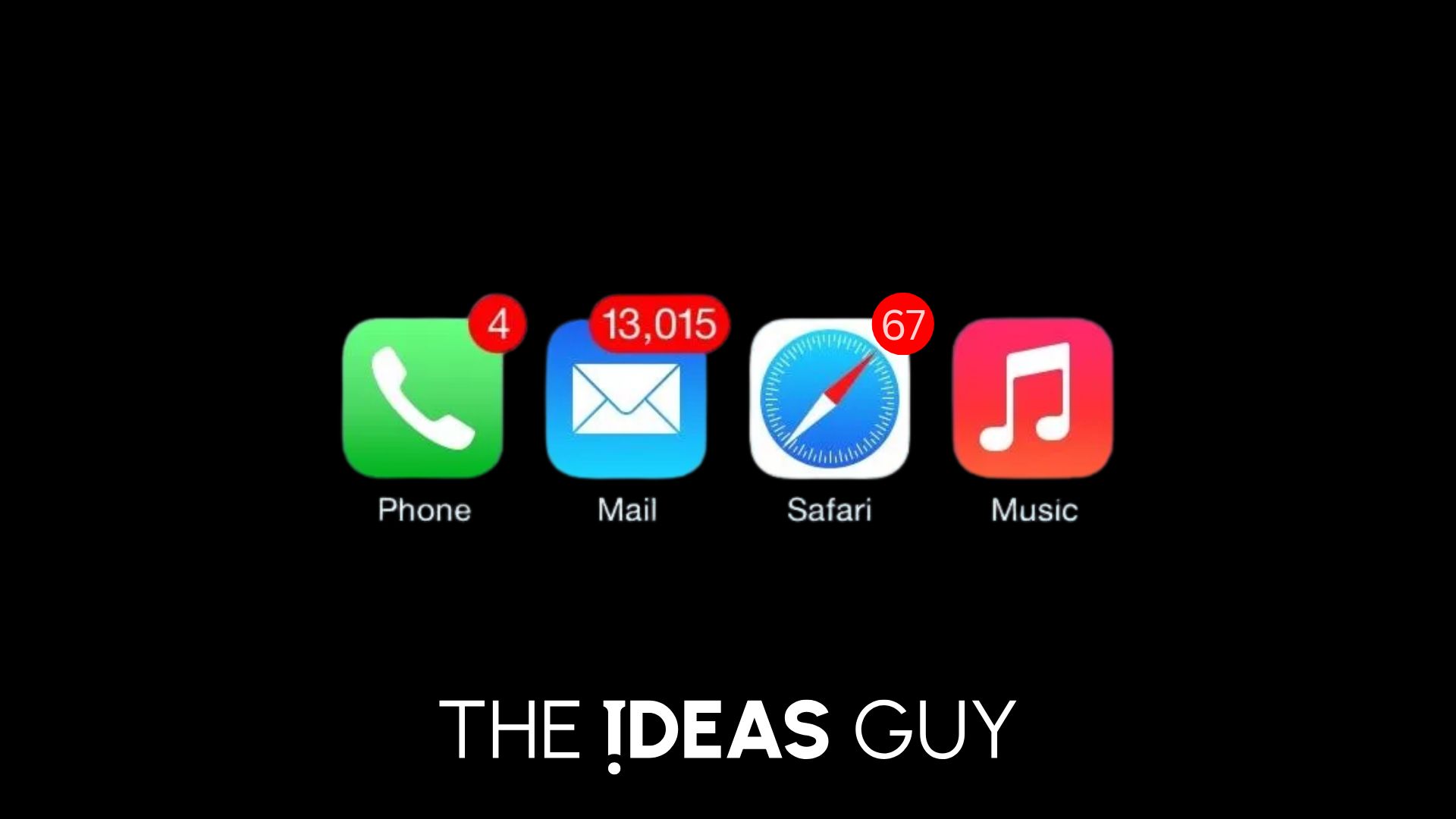
Digital notifications are kryptonite for ADHD brains. Every ping, every vibration, every red dot is an attention theft waiting to happen. My phone is essentially a distraction delivery device, constantly interrupting whatever I’m supposed to be doing.
I’ve written before about the twelve thieves of focus in our modern world. For ADHD brains, notifications aren’t just thieves - they’re armed robbers breaking in every few minutes to steal whatever attention I’ve managed to gather.
The problem isn’t just the immediate distraction of checking the notification. It’s the recovery time afterwards. Research suggests it takes an average of 23 minutes to return to full focus after an interruption. For ADHD brains, that recovery time is even longer - if we manage to return to the original task at all.
Amanda has learned to recognise the notification death spiral: I’ll pick up my phone to check one thing, then see another notification, check that, see something interesting, start reading, remember something else I meant to look up, and twenty minutes later I’ve completely forgotten what I originally picked up my phone for.
“Your phone is an extension of your distraction,” Amanda says. “You can’t not check it. Even when you’re trying to focus, even when you know it’s going to derail you, you still check it.”
She’s right. The pull is almost irresistible. Even with Do Not Disturb enabled, even with notifications turned off, I still find myself picking up my phone, just to “check quickly.” That quick check never stays quick. But I have also had to be proactive about my notification management - I have turned off pretty much everything other than the immediate, especially because the little red circles with white numbers on my iPhone icons become way more distracting than they should!
The Conversation Drift
ADHD distraction doesn’t just affect tasks - it affects conversations too. Amanda or the kids will be telling me something important, and my attention will drift away. Not because I don’t care, but because my brain has latched onto a tangential thought or external stimulus.
“You do this thing where you’re clearly not listening anymore,” Amanda observes. “Your eyes glaze over, you get that distant look, and I know you’ve gone somewhere else in your head. Sometimes you’re nodding along like you’re listening, but I know you haven’t heard a word I’ve said.”
This is particularly difficult in the context of our relationship. Important conversations - about feelings, about plans, about problems - require sustained attention. When my brain drifts mid-conversation, it sends a message that what Amanda is saying isn’t important enough to hold my focus. Even though that’s not true.
The worst part is when I don’t even realise I’ve drifted. Amanda will finish saying something, and I’ll respond based on the last bit I actually heard, revealing that I’ve missed half the conversation. Or I’ll nod and agree to something without fully processing what I’ve agreed to.
The Urgency Addiction
ADHD brains often respond well to urgency. Deadlines, crises, anything that creates a sense of immediate pressure can temporarily override the distraction. This creates a problematic pattern: I’m most productive when things are urgent or about to become disasters.
The washing doesn’t get done until we’ve run out of clean clothes. The DIY doesn’t get done until it’s causing actual problems. The work project doesn’t get started until the deadline is imminent. This last-minute scramble mode is exhausting for everyone, but particularly for Amanda, who prefers to deal with things before they become urgent.
“You seem to need things to be on fire before you’ll deal with them,” Amanda says. “And I’m left either nagging you constantly to prevent fires, or dealing with crises that shouldn’t have been crises.”
This pattern isn’t about procrastination in the typical sense. It’s about my brain only being able to engage fully when the consequences of not engaging are immediate and severe. Without that urgency, everything else is just more interesting.
The Hyperfocus Trap
The flip side of constant distraction is hyperfocus - when my ADHD brain locks onto something interesting and won’t let go. During hyperfocus, I can work on something for hours without break, forgetting to eat, ignoring all other responsibilities, completely absorbed.
This sounds productive, but it’s just as disruptive as the distraction. When I’m hyperfocused, I’m essentially unreachable. Amanda can be talking to me, and I genuinely don’t hear her. Plans get forgotten. Time becomes meaningless.
“The hyperfocus is frustrating in a different way,” Amanda explains. “At least with the distraction, you’re somewhat present. With hyperfocus, you’ve left the building entirely. You’re physically here but mentally you’re in another dimension.”
The unpredictability of both distraction and hyperfocus means Amanda never quite knows which version of me she’s getting. Will I be scattered and distracted, unable to focus on anything? Or will I be locked into hyperfocus, oblivious to everything else? There’s rarely a comfortable middle ground.
.jpg)
The Accountability Tension
This brings us back to the central theme of this series: ADHD explains behaviour, but it doesn’t excuse it. My distraction is real, neurological, and largely involuntary in its initial manifestation. But I’m still accountable for developing strategies to manage it and for how my lack of management affects Amanda and our household.
Amanda has every right to expect that when she asks me to do something, I’ll actually do it. She has every right to complete conversations without them being interrupted by my wandering attention. My ADHD doesn’t eliminate her right to expect basic reliability and presence.
The philosopher Søren Kierkegaard (who I quoted in the RSD chapter) wrote about the distinction between immediacy and reflection. My ADHD might create immediate distractibility, but I still retain the capacity for reflection and choice about how I respond to that distractibility.
“Our age is essentially one of understanding and reflection, without passion, momentarily bursting into enthusiasm, and shrewdly relapsing into repose. ... There is no more action or decision in our day than there is perilous delight in swimming in shallow waters.” Søren Kierkegaard
“I understand you get distracted,” Amanda tells me. “I do. But that doesn’t mean I have to just accept chaos as the permanent state of our lives. You need to take responsibility for finding ways to manage it.”
She’s right. Understanding that my distraction is neurological doesn’t eliminate my responsibility to work on it. This means:
- Developing and using strategies to reduce distractibility (even when they’re effortful)
- Being honest when I’ve got distracted rather than making excuses
- Not using ADHD as a blanket excuse for never finishing anything
- Recognising when I need to hyperfocus and communicating that to Amanda rather than just disappearing into my own world
Amanda is responsible for maintaining her own expectations whilst understanding my neurological reality. She’s responsible for adapting her communication (as we discussed in Part 2), but not for becoming my full-time task manager. She’s responsible for expressing when the distraction is affecting her without feeling guilty for “not being understanding enough.”
Neither of us is responsible for fixing the other, but we’re both responsible for working on ourselves whilst supporting each other’s growth.
.jpg)
What Actually Helps (And What’s Still Messy)
Most advice about managing ADHD distraction falls into two unhelpful categories: either “just focus harder” (which is neurologically impossible) or “your partner should just accept you as you are” (which is relationally impossible).
The reality is messier than either of those options, and messier than most ADHD advice acknowledges.
What I Try To Do:
External structure - I can’t rely on internal motivation or attention management, so I create external structure. Lists. Timers. Alarms. Physical barriers that force me to complete tasks before moving on. It’s effortful, and I often resist it because it feels constraining, but it works better than trying to remember things or trust my attention to hold steady.
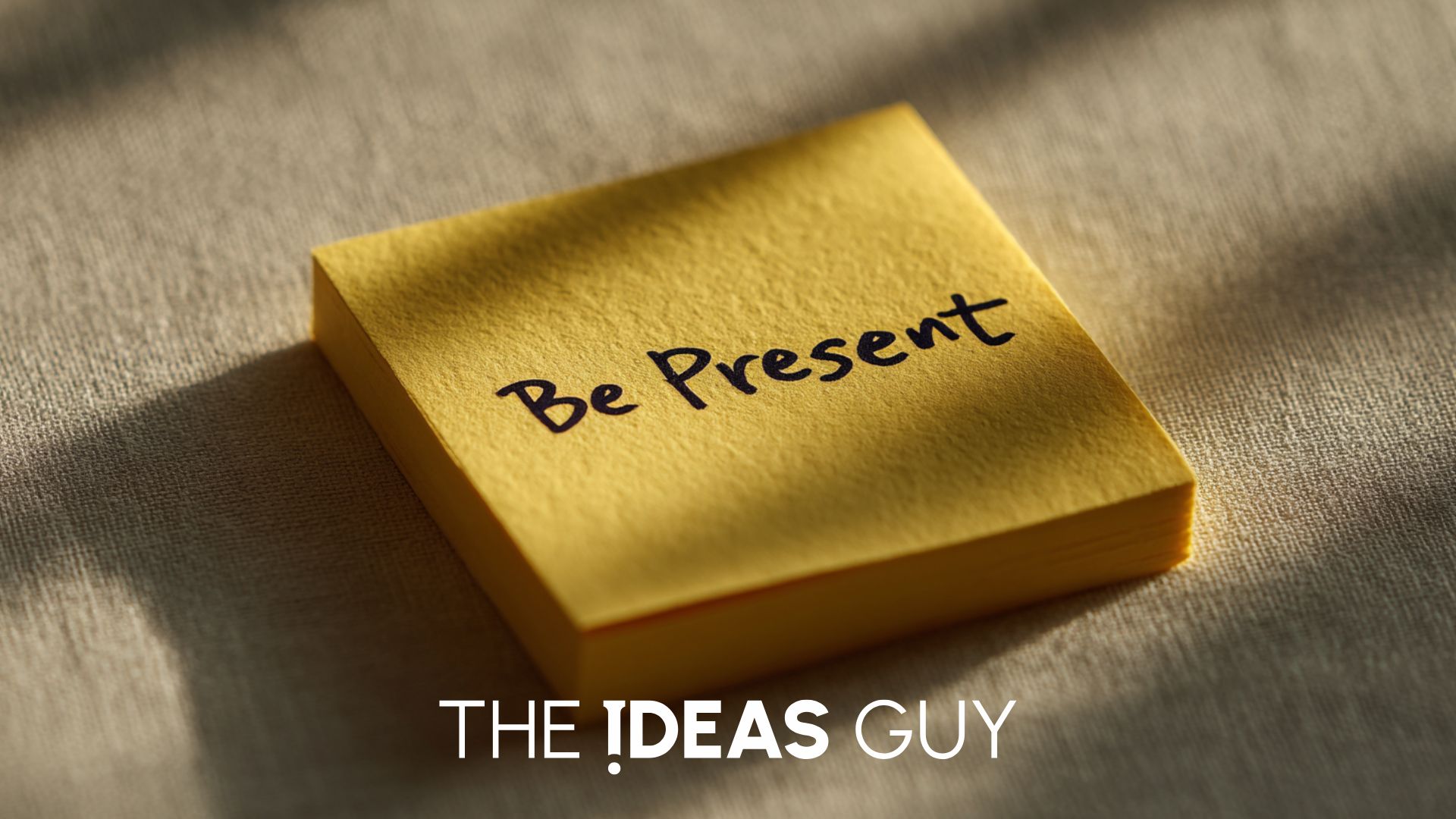
I use a physical notebook and Post-Its for task lists rather than apps because apps on my phone are just more opportunities for distraction. I set timers for tasks to create artificial urgency. I physically remove my phone from rooms when I need to focus.
The one-task rule - When I’m going to do something, I try to implement a rule: one task only, no deviations. This is harder than it sounds. Opening my emails to clear them, my brain screams “BUT THIS LINKEDIN NOTIFICATION NEEDS CHECKING! AND THIS ARTICLE LOOKS IMPORTANT!” Ignoring that impulse takes significant effort.
Often, I don’t manage it. I get distracted anyway. But having the rule as an intention helps more often than not.
Medication - I take ADHD medication (when I remember to, which is its own ironic struggle). It doesn’t eliminate the distraction, but it does reduce the intensity of the attention-stealing. Tasks that would be impossible become merely difficult. That’s not nothing.
But medication isn’t magic. I still get distracted. I still hyperfocus inappropriately. I still lose track of tasks. The medication just makes the symptoms more manageable, not absent.
Being present - I am learning (I am on a journey) to make being present my main task. I write it in places, people text it to me and I wake up with every good intention to enjoy moments rather than rushing to the next one.
What Amanda’s Learning:
Working with the distraction before it happens - Amanda has learned to front-load important information in conversations, knowing my attention is most reliable at the start. If there’s something crucial, she tells me right away rather than building up to it. She’s also learned to check in without it feeling like nagging (usually). “Did you manage to do the washing?” isn’t an accusation; it’s a realistic acknowledgement that I might have got distracted.
Accepting some chaos - Amanda has had to adjust her expectations about what our household looks like. It’s never going to be as organised or as tidy as she might prefer. Tasks will take longer than they should. I will start things that don’t get finished for weeks. “I’ve had to choose what matters,” Amanda reflects. “I can’t control everything or prevent every bit of chaos. I have to focus on what’s actually important and let some of the mess just… be mess.”
Setting clear boundaries - Amanda has learned that she can’t be my external executive function all the time. She’ll help, she’ll remind, she’ll adapt her communication - but she won’t take on the full cognitive load of managing my attention. This means sometimes things don’t get done, and that has consequences. Natural consequences are better teachers than Amanda constantly rescuing me from my own distraction.
What We’re Both Doing:
Accepting the messiness - We don’t have elegant solutions. I still get distracted regularly. Amanda still finds it frustrating. We haven’t “cracked” ADHD distraction management. We’re just navigating it imperfectly, with more failures than successes. But we’re both trying, which has to count for something.
Using humour when possible - Sometimes, the distraction is genuinely funny. The email-that-became-everything incident, in retrospect, is absurd. Finding humour in the chaos helps defuse tension and acknowledges the reality without making it feel like a disaster. “If I couldn’t laugh about it sometimes, I’d cry,” Amanda admits. “So we laugh. It doesn’t fix anything, but it makes it easier to live with.”
The Growth That’s Actually Happening
When I was first diagnosed with ADHD and learned about the attention difficulties, I hoped understanding would somehow make it manageable. That awareness would create control.
It hasn’t worked that way.
The distraction is still just as intense. I still get pulled away from tasks by every passing stimulus. I still find myself doing three things that nobody asked for whilst failing to do the one thing that mattered. The attention-stealing feels just as overwhelming, just as constant, just as frustrating.

What’s changed isn’t the intensity of distraction but my awareness of the pattern. I’m better at recognising when I’ve been distracted (eventually). I can see the task multiplication effect happening (sometimes). I can acknowledge when I’ve hyperfocused inappropriately (after the fact). Amanda’s growth is different. She’s learning the language around ADHD distraction, understanding it as a neurological reality rather than just a frustrating personality trait. She’s developed strategies for working with my attention span rather than fighting against it.
But understanding hasn’t made it easier for Amanda to live with. She still bears most of the cognitive load of managing around my distraction. She still experiences frustration when simple tasks become complicated by my attention going walkabout.
We haven’t found some perfect solution that prevents distraction. We’ve just learned to recognise it for what it is, which is progress even if it’s not transformation. But we recover. We talk more about what happens once I emerged. Amanda expresses her frustration with losing half the day to my distraction. I acknowledge that my attention theft affects both of us.
We didn’t solve anything, but we name the reality of what had occurred.
The emails? Eventually cleared, but only after Amanda gently reminded me. The packing? Done together, but later than planned. The LinkedIn profile got updated though, so that’s something.
The Reality Check
Living with ADHD distraction in a relationship is hard. There’s no getting around that. It creates real challenges that require ongoing work from both partners. It means simple tasks become complicated, conversations get interrupted, and reliability is never quite as reliable as it should be. And we haven’t cracked it. We don’t have a system that prevents distraction. We don’t have strategies that keep me consistently on-task. We don’t have the kind of executive function support that ADHD experts recommend.
What we have is ongoing navigation of something difficult. Amanda is learning to understand distraction whilst still maintaining her expectations. I’m learning to recognise distraction patterns and develop strategies whilst taking responsibility for the impact of my attention going walkabout. Neither of us is doing this perfectly. We’re both doing it imperfectly, together.
The key is maintaining the balance we’ve emphasised throughout this series: understanding ADHD distraction as a neurological reality whilst refusing to let it become an excuse for never completing anything. Adapting communication and expectations whilst maintaining boundaries and accountability. Working with ADHD whilst still demanding effort and growth from both partners. We probably never will nail this. But we’ve built a relationship that can withstand my distraction without either of us losing ourselves in the process. That’s not despite the distraction - it’s through learning to navigate it together with honesty about how messy it actually is.
Most ADHD advice presents tidy solutions to attention problems. But ADHD distraction doesn’t have tidy solutions. It has ongoing navigation, imperfect strategies, and the commitment to keep trying even when attention has been stolen for the thousandth time. That’s less satisfying than a neat list of techniques, but it’s more honest about what living with ADHD distraction actually requires.
Key Takeaways
1. ADHD distraction isn’t “just not paying attention” - it’s neurological - The brain’s filtering system doesn’t work properly. Every stimulus becomes equally urgent. Understanding this changes how both partners approach it, but doesn’t eliminate the chaos or frustration.
2. Task multiplication is real and exhausting - Starting one task spawns multiple others. It’s not about being thorough; it’s about inability to filter relevant from irrelevant stimuli. Productivity in the wrong direction is still disruptive.
3. The contrast between distraction and hyperfocus is jarring - Partners never know which version they’re getting. Either scattered everywhere or locked into one thing. There’s no comfortable middle ground, and both extremes are disruptive.
4. Conversation drift isn’t about not caring - Attention drifts mid-conversation not because the topic isn’t important, but because the brain has latched onto something else. It’s involuntary but still impacts relationship trust and communication. On that note, I use Supernormal or Gemini in my online work calls as an AI notetaker, not because I’m lazy but so that I can be more present in a conversation rather than worrying about what I need to remember from it!
5. Strategies require constant effort - External structure, one-task rules, medication - they all help but require ongoing application. There’s no autopilot mode for managing ADHD distraction. I do set reminders for reordering medication though (because for some strange reason, I can’t get a repeat prescription for the thing that my neurological condition means I’m likely to forget - bureaucratic nonsense!)
6. Partners bear invisible cognitive load - Managing around someone’s distraction is exhausting emotional and mental labour. Acknowledging this reality without expecting the partner to become a full-time task manager. Amanda is awesome but she’s not my carer or my PA. I need to remember that more!
Real progress looks like navigating distraction imperfectly together, not developing fully-fledged solutions that prevent all attention theft. Commitment to trying matters more than perfect task completion. Until there are better solutions, we just have to accept the messiness and navigate it carefully - one stolen attention span at a time.
Further Reading
Discover more interesting articles here.