.png)
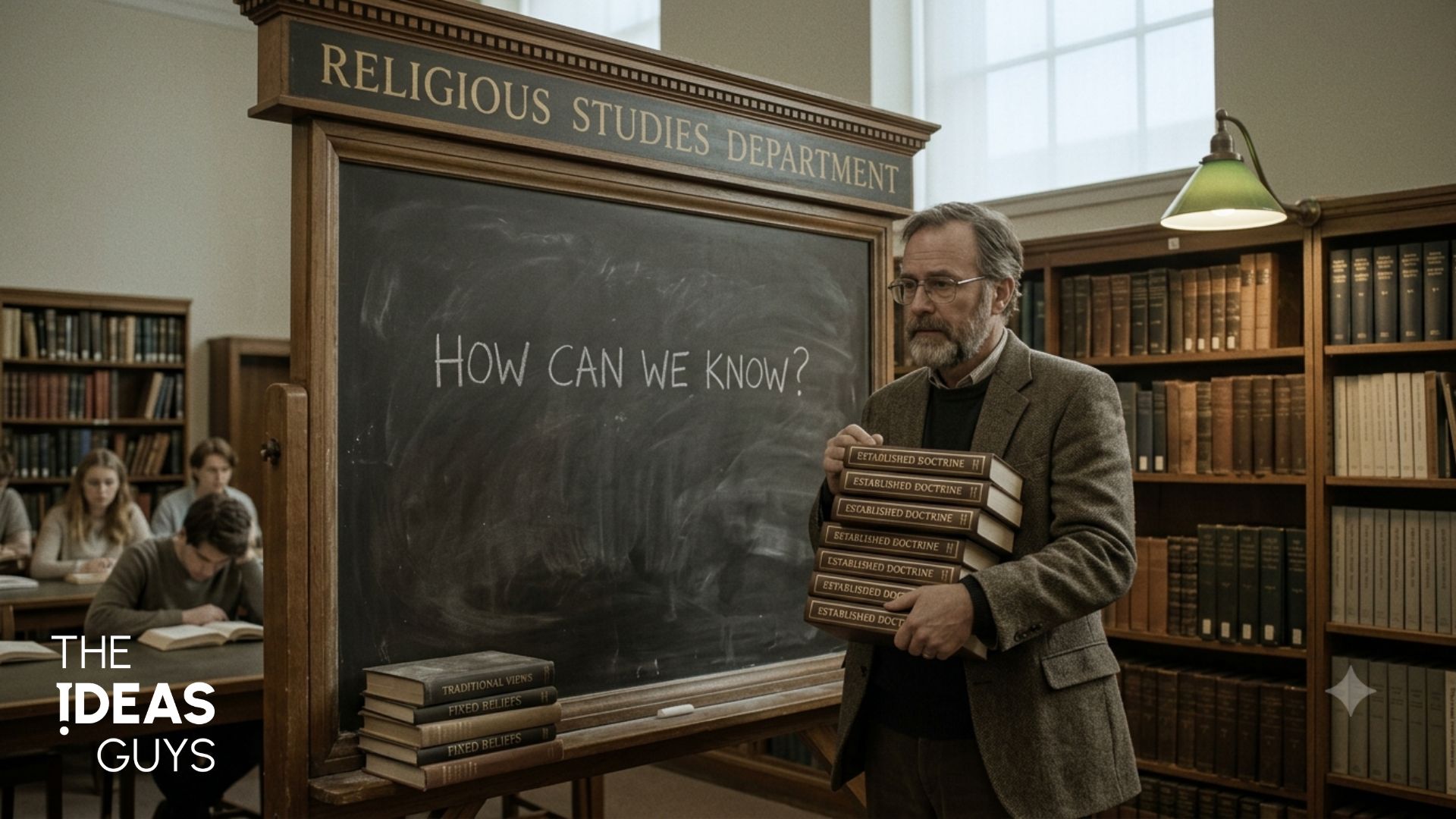
Most classrooms operate on a simple model: the teacher knows, the students don't, and the teacher's job is to transfer that knowledge efficiently. This transmission model dominates our schools despite overwhelming evidence that it produces shallow understanding at best.
The problem isn't just pedagogical; it's philosophical. We've mistaken education for information delivery when it's actually about developing minds capable of thinking. Human understanding doesn't develop through absorption of facts but through dialogue - the genuine collision of ideas, the wrestling with concepts, the articulation and testing of thinking against other minds.
Yet observe most lessons and you'll find something masquerading as dialogue but fundamentally different. The Initiation-Response-Evaluation pattern dominates: teacher asks a question, student provides an answer, teacher evaluates it and moves on. This isn't dialogue; it's interrogation with a friendly face.
The theory behind genuine dialogic education stretches back over two thousand years, from Socrates through Vygotsky and Bakhtin to contemporary researchers like Robin Alexander. Yet we persist with monologic teaching dressed up in dialogic clothing. We call it discussion when students take turns answering teacher questions. We label it collaborative when they work in groups but never genuinely engage with each other's ideas.
The consequences extend beyond academic outcomes. When ChatGPT can explain calculus more clearly than most teachers, where YouTube provides better demonstrations than most lab equipment, the unique value of school (in whatever form this takes) lies in developing capacities machines cannot replicate. The ability to think dialogically - to build understanding through genuine exchange, to test ideas against others, to revise thinking based on conversation - remains distinctly human.
We need to examine dialogic education matters, what it actually looks like, and why we're mostly failing to implement it despite claiming otherwise.
Socrates and the Death Penalty for Asking Questions
Athens, 399 BCE. Socrates, at age 70, faced execution for corrupting the youth. His crime? Teaching young Athenians to question rather than accept. The authorities weren't being paranoid; Socrates was genuinely dangerous to a system built on received wisdom and unexamined tradition.
His method - the elenchus - operated through systematic questioning that dismantled false certainty. Socrates didn't provide knowledge; he exposed ignorance, including his own. His famous claim "I know that I know nothing" wasn't false modesty but philosophical rigour. Genuine wisdom, he argued, begins not with accumulating facts but with acknowledging the limits of understanding.
The Socratic method gets regularly misrepresented in modern education. Teachers who fire rapid questions at students, expecting particular answers, claim to be "using the Socratic method". They're not. Socrates didn't have predetermined answers he wanted students to reach. He genuinely didn't know. His questions opened up thinking rather than funnelling students toward correct responses.

It’s worth digging into how Socrates operated. When someone claimed to understand justice, he didn't correct them or provide a better definition. He asked questions that revealed contradictions in their thinking. Through dialogue, the person discovered their own conceptual confusion. The process was often uncomfortable - hence the "gadfly" metaphor Socrates used for his role. But discomfort indicated thinking was actually happening.
The midwife metaphor captures something essential about dialogic teaching. Socrates claimed his mother was a midwife, and he practised the same profession intellectually. Midwives don't create babies; they help bring forth what's already forming. Similarly, Socrates didn't implant ideas in students' minds; he helped them articulate understanding that was developing through conversation.
This approach fundamentally threatens traditional schooling. If learning happens through dialogue rather than transmission, the teacher's authority shifts dramatically. The teacher becomes facilitator of thinking rather than dispenser of truth. This requires intellectual humility - the willingness to admit "I don't know" or "I hadn't considered that" - which runs counter to how we typically define teacher expertise.
Athens executed Socrates for undermining the foundations of their society. Modern education systems are slightly more subtle, but the preference for transmission over dialogue serves similar conserving functions. Students who learn to question deeply become harder to manage, harder to assess, and potentially threatening to established ways of thinking.
Yet Socrates understood something we keep forgetting. Real education isn't about filling empty vessels with knowledge. It's about developing minds capable of critical examination, of distinguishing genuine understanding from mere opinion, of thinking rather than merely remembering. These capacities develop through dialogue, not monologue.
The irony is sharp. We claim to value critical thinking, yet structure classrooms in ways that make genuine critical dialogue nearly impossible. We praise Socrates whilst operating schools that would have him disciplined for poor classroom management. His students weren't sitting in rows, answering questions one at a time, working silently in books. They were arguing, debating, challenging each other and him. That looked like chaos to the authorities. It still does.

Vygotsky and Learning in the Space Between
Fast forward two millennia to Soviet Russia. Lev Vygotsky, working in the 1920s and 30s, developed a psychological framework that vindicated Socrates' intuition. Learning, Vygotsky argued, is fundamentally social. More specifically, it happens in conversation with those who know more than we do.
His Zone of Proximal Development remains one of psychology's most influential concepts whilst being consistently misunderstood in practice. The ZPD represents the gap between what a learner can do independently and what they can achieve with support. Crucially, that support isn't direct instruction; it's collaborative dialogue.
Vygotsky distinguished between actual development level (what you can do alone) and potential development level (what you can do through collaboration). The zone between these levels is where learning occurs. Not through being told, but through working alongside others who can model, prompt, question, and support thinking.
The implications upend traditional teaching. If learning happens in the ZPD, then the teacher's primary role isn't explaining content but creating conditions for dialogue within that developmental space. This requires knowing where each student is, what they can currently do, and how to structure interactions that extend their capacity.
The concept of the "More Knowledgeable Other" gets regularly misinterpreted as meaning "teacher". Vygotsky's point was broader. The MKO could be a peer, an older student, a parent, a teacher or perhaps (shock horror!) a machine. What matters isn't status but the ability to support learning through dialogue. This challenges classroom hierarchies where knowledge flows unidirectionally from teacher to student.
Vygotsky's distinction between inner speech and social speech helps me understand why dialogue matters so profoundly. We don't think in complete sentences; our internal dialogue is fragmented, abbreviated, essentially private. Learning involves making this private thinking public through language, testing it against others' thinking, and refining it through conversational exchange.
When students articulate half-formed ideas and receive substantive responses, they're not just communicating thinking; they're developing it. Thought develops through language, language through dialogue. This isn't merely a claim about learning; it's a claim about consciousness itself. Our capacity for abstract thought emerges from and depends upon social interaction.
The scaffolding metaphor that emerged from Vygotsky's work captures something important but also misleads. Scaffolding suggests a temporary structure that's removed once the building stands independently. But genuine dialogic support isn't simply removed; it's internalised. The questions I learn to ask myself, the thinking strategies I develop, the critical perspectives I adopt - these aren't scaffolds that disappear but tools that become part of my cognitive toolkit.
This matters enormously for classroom practice. If learning is fundamentally dialogic, then working in silence for extended periods isn't just less engaging; it's educationally impoverished. Students need opportunities to articulate thinking, to test ideas against others, to revise understanding based on conversational feedback. Not occasionally as a treat, but as the primary mode of learning.
Yet observe most classrooms and you'll find the opposite. Extended teacher talk, followed by individual work, occasionally punctuated by brief discussions where students take turns offering answers. The ratio is backwards. If Vygotsky was right - and decades of research suggest he was - then dialogue should be primary and individual work secondary.
The challenge is practical. How do you create genuine ZPD-level dialogue with 30 students at different levels? How do you ensure productive conversation rather than confused chat? These aren't trivial questions, and they explain why transmission teaching persists despite its limitations. Dialogic teaching is harder. Much harder. But difficulty doesn't make it optional.
Vygotsky's premature death at 37 left his work incomplete, but his core insight stands. Learning isn't primarily individual cognition that occasionally gets shared socially. It's fundamentally social activity that sometimes becomes individual. We learn to think by thinking with others. The implications for how we structure classrooms remain radical nearly a century later.
Oh and by the way, my favourite Vygotsky quote is,
“People with great passions, people who accomplish great deeds, people who possess strong feelings, even people with great minds and a strong personality, rarely come out of good little boys and girls.” Lev Vygotsky
Bakhtin's Polyphonic Classroom
Mikhail Bakhtin, working in similarly constrained Soviet conditions, approached dialogue from a linguistic rather than psychological perspective. His insights complement Vygotsky's whilst adding something essential about the nature of understanding itself.
Bakhtin distinguished between monologic and dialogic discourse. Monologic discourse operates from a single authoritative perspective. The speaker possesses truth and communicates it to listeners. Meaning is fixed, complete, and under the speaker's control. Most teaching operates monologically - the teacher knows, the students receive.
“Truth is not born nor is it to be found inside the head of an individual person, it is born between people collectively searching for truth, in the process of their dialogic interaction.” Mikhail Bakhtin
Dialogic discourse recognises that meaning emerges between speakers, not within them. Every utterance responds to previous utterances and anticipates future ones. We don't simply express pre-formed thoughts; we develop thinking through the give-and-take of conversation. Understanding isn't transmission but co-creation.
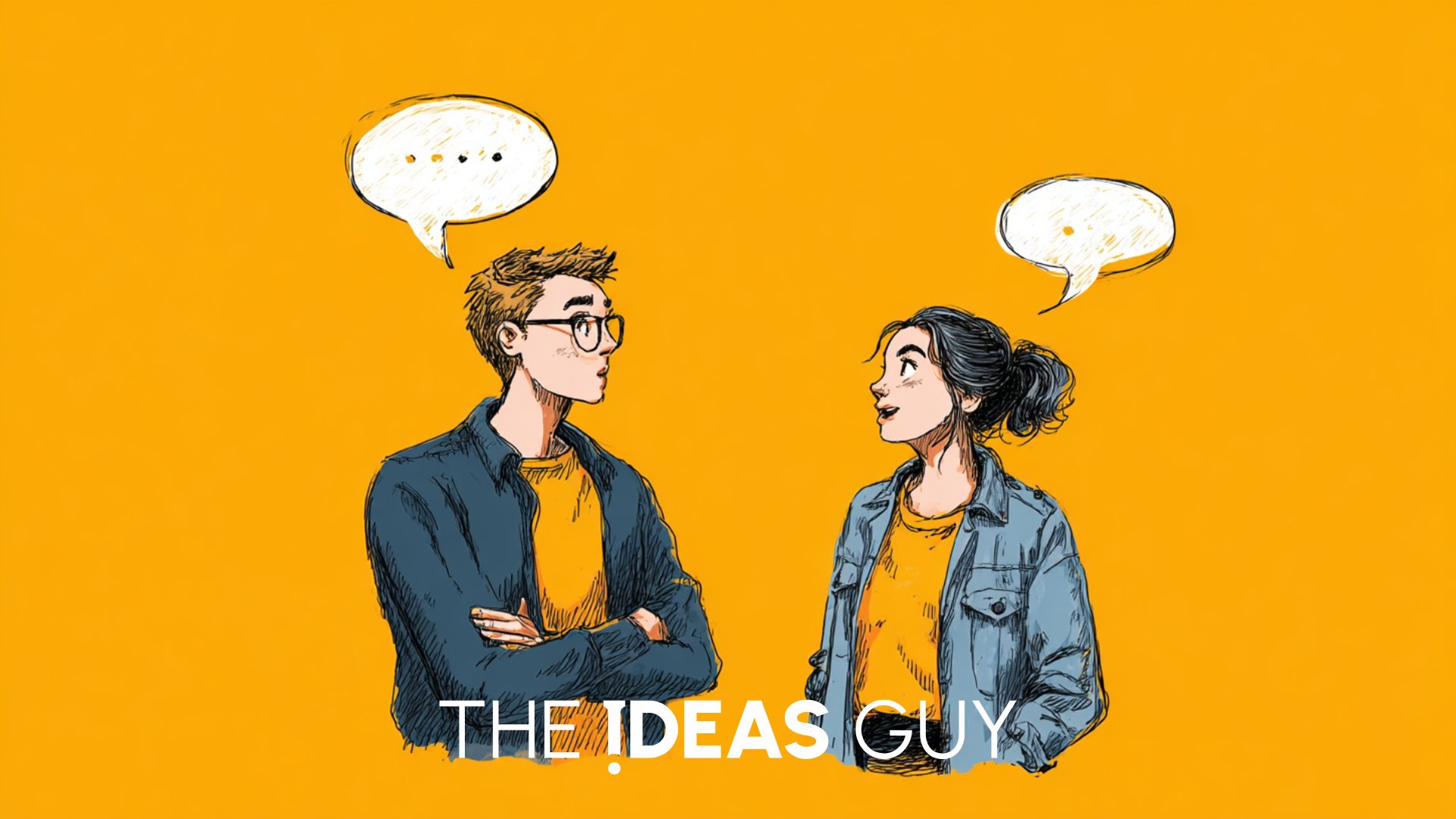
Bakhtin's concept of "polyphony" - multiple voices sounding simultaneously without a single authoritative voice dominating - offers a powerful metaphor for what classrooms could be. Rather than the teacher as conductor ensuring everyone plays the same tune, it’s like a jazz ensemble where different instruments respond to and build on each other's contributions.
I have written before about the Jazzification of Education so this won’t come as a surprise for long-time readers!
This isn't chaos. Jazz has structure, patterns, conventions. But meaning emerges from interaction, from the unpredictable collision of different voices. Similarly, dialogic classrooms have structure and purpose, but understanding develops through genuine exchange rather than predetermined paths.
I will also refer once again to Martin Buber’s philosophy. In what he calls I-It relationships, we treat others as objects - means to our ends, things to be managed or manipulated. In I-Thou relationships, we engage with others as subjects in their own right, worthy of genuine encounter.
Most classroom talk operates in I-It mode. Teachers ask questions not out of genuine curiosity but to assess knowledge or move students toward predetermined answers. Students respond not to engage with ideas but to satisfy teacher expectations. The form resembles dialogue, but the substance is transactional.
Genuine dialogue requires I-Thou engagement. The teacher must be genuinely curious about student thinking, willing to be surprised, open to having their own understanding shifted. Students must engage with each other's ideas, not just wait for their turn to speak. This vulnerability - the possibility of being wrong, of changing your mind, of not knowing - is essential to authentic dialogue but threatening to traditional classroom authority.
Bakhtin's concept of "carnival" - temporary suspension of normal hierarchies where multiple voices gain equal standing - suggests what dialogic classrooms might resemble. Not anarchy, but a carefully structured space where normal power relationships temporarily recede to allow genuine exchange of ideas. Even though this carnival concept is complex, the application is worth exploring.
The challenge is that most classrooms appear dialogic whilst remaining fundamentally monologic. Teachers pose questions, invite student contributions, facilitate discussions. But beneath the surface, the teacher's voice remains authoritative and controlling. The right answers exist, and everyone knows it. Students learn to decode what the teacher wants rather than developing their own thinking.
Bakhtin helps us understand why simply adding "discussion" to lessons doesn't create genuine dialogue. If the discussion operates monologically - with the teacher as final authority on meaning - then it's not dialogue but recitation dressed up in conversational clothing. Students speak, but genuine polyphony never emerges.
This isn't an argument for relativism or the abandonment of disciplinary knowledge. Bakhtin wasn't suggesting all perspectives are equally valid or that teachers shouldn't possess expertise. Rather, he recognised that understanding develops through the collision of different perspectives, including expert and novice voices. The teacher's knowledge matters, but it should enter the conversation as one voice among many, not as the voice that silences all others.

Robin Alexander and Dialogic Teaching in Practice
Last up is Robin Alexander, the Cambridge researcher who transformed dialogic theory into practical pedagogy. His work, particularly through the Cambridge Primary Review and subsequent research, provides the clearest articulation of what dialogic teaching actually looks like in British classrooms.
Alexander identified five key principles that distinguish genuine dialogic teaching from the recitation and rote that dominate most classrooms. These aren't tips and tricks; they're key characteristics that must all be present for teaching to qualify as genuinely dialogic.
First, dialogic teaching is collective. Students address learning tasks together, whether as a class, in groups, or in pairs. This isn't simply about grouping bodies together but about genuinely pooling ideas. The collective aspect means understanding emerges from joint activity rather than individual cognition that occasionally gets shared.
Second, it's reciprocal. Participants listen to each other, share ideas, and consider alternative viewpoints. The teacher doesn't simply respond to students; students respond to each other, building on contributions, challenging assumptions, developing thinking through exchange. Reciprocity requires genuine listening rather than waiting for your turn to speak.
Third, dialogic teaching is supportive. Children articulate ideas freely, without fear of embarrassment or failure, and help each other to reach common understandings. This psychological safety is essential. If students fear wrong answers will be mocked or punished, they'll remain silent or say only what they think the teacher wants to hear.
Fourth, it's cumulative. Teachers and children build on their own and each other's ideas to construct coherent lines of thinking and enquiry. This distinguishes dialogic teaching from disconnected question-answer sequences where each exchange is isolated. Genuine dialogue builds, with each contribution connecting to and extending previous ones.
Finally, it's purposeful. Classroom talk is structured with educational goals in view, even if the path to those goals isn't predetermined. Dialogic teaching isn't aimless chat; it's focused enquiry where the teacher maintains clear sight of learning objectives whilst remaining flexible about how students reach understanding.
Alexander's work emerged from observation of classrooms across five countries - England, France, India, Russia, and the United States. What struck him was how little genuine dialogue occurred in most classrooms, despite dramatic differences in cultural contexts and educational systems. The transmission model transcends national boundaries.
“Children will not learn to think for themselves if their teachers merely do as they are told." Robin Alexander
In England particularly, Alexander found that classroom talk fell into three dominant patterns: rote (drilling facts through repetition), recitation (teacher questions followed by student answers), and instruction/exposition (teacher explanation). Genuine discussion and dialogue were remarkably rare. When they occurred, they were brief and often quickly shut down in favour of more controlled interaction.
The Cambridge Primary Review, which Alexander led from 2006-2010, argued forcefully that this impoverished talk environment was harming children's development. Not just academically, though academic outcomes suffered, but in terms of developing the communicative and cognitive capabilities essential for democratic citizenship.
Alexander makes a crucial distinction between "talk for learning" and "learning to talk". Schools focus heavily on the latter - teaching children to speak Standard English, to present to audiences, to communicate clearly. These matter and the current focus on oracy is welcome in my opinion, but they're distinct from using talk as the primary medium for developing understanding. Dialogic teaching prioritises talk for learning, recognising that how we structure classroom conversation fundamentally shapes what students can learn.
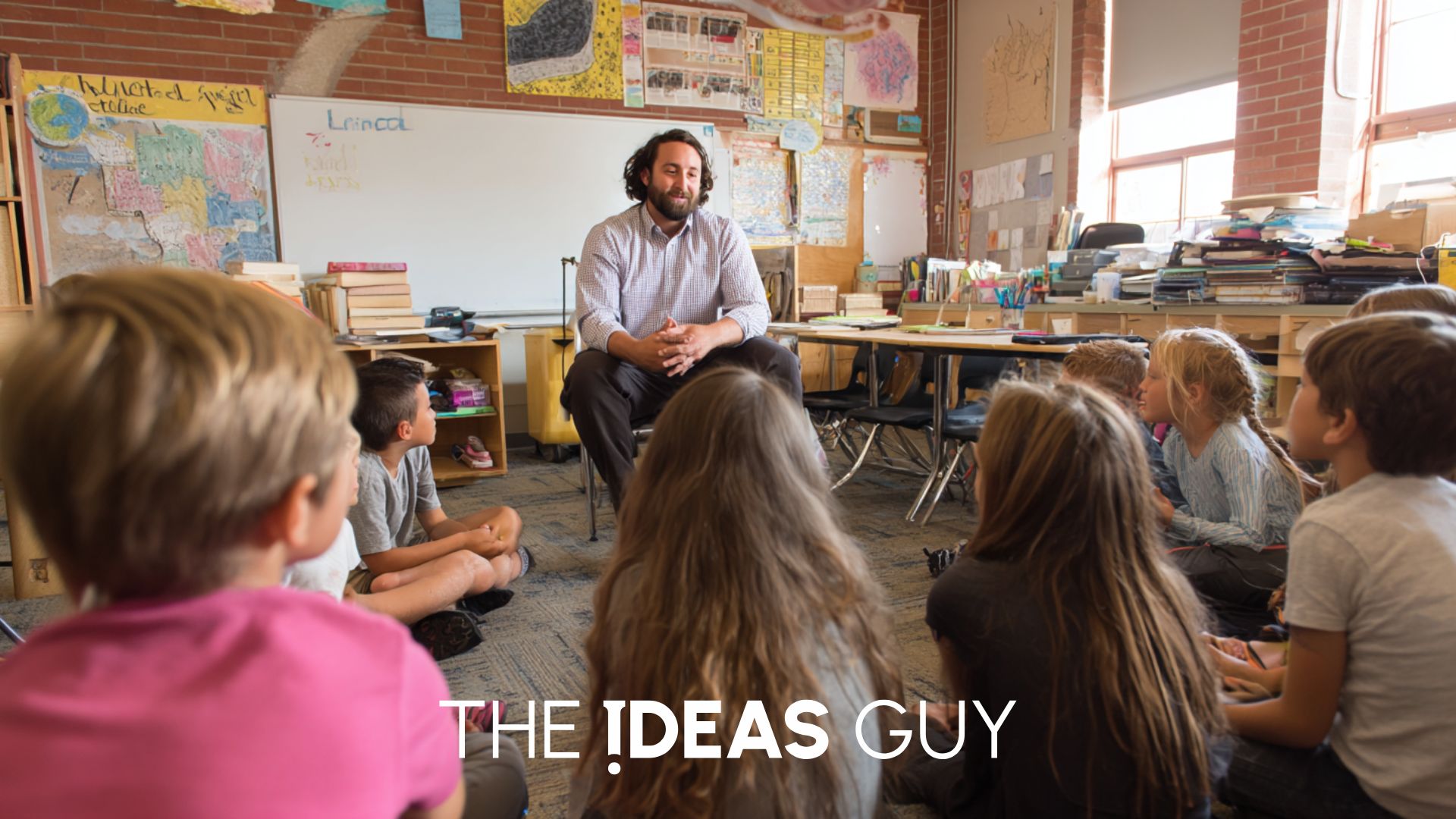
This isn't the same as group work, a distinction Alexander emphasises repeatedly. Most group work involves students working individually on tasks whilst sitting together. Occasionally they discuss their work, but the discussion is supplementary to individual activity. In dialogic teaching, the discussion is the activity. Understanding develops through sustained conversational exchange, not through individual work followed by brief sharing.
Neither is it "student-led" in the sense of abandoning structure or expert knowledge. Alexander is clear that dialogic teaching requires careful planning, structured tasks, and active teacher facilitation. The teacher's role shifts from information transmission to orchestrating productive dialogue, but it remains essential and demanding. It’s not unlike the prepared environment I talked about in the chapter about Maria Montessori in my book.
What does this look like practically? Alexander describes classrooms where students routinely build extended contributions rather than offering brief answers. Where they respond to each other's ideas, not just to the teacher. Where disagreement is welcomed and explored rather than resolved quickly. Where thinking is made visible through talk and refined through conversational exchange.
One example from Alexander's research involved a Year 5 class discussing whether ancient Athens was democratic. Rather than the teacher explaining democracy and having students apply the definition, the class engaged in extended dialogue about what democracy means, whether ancient practices meet those criteria, and how we judge historical systems by modern standards. The teacher posed provocative questions, encouraged students to challenge each other's claims, and helped them build increasingly sophisticated arguments. Understanding of both democracy and ancient Athens emerged through the dialogue itself.
This approach requires different assessment thinking. If understanding develops through dialogue, then individual written tests capture only part of what students know. Their capacity to think dialogically - to build on others' ideas, to revise thinking based on challenge, to articulate and test hypotheses - matters as much as the conclusions they reach. Yet these capacities are nearly impossible to assess through traditional testing.
Alexander's work has influenced policy and practice, particularly through the introduction of Philosophy for Children in some UK schools (something I absolutely loved when I was in the classroom) and the growth of approaches like Thinking Together and Dialogic Reading. But the fundamental tension remains: genuine dialogic teaching challenges too many assumptions about control, assessment, and curriculum coverage to become mainstream practice.
Why This Matters Now More Than Ever
The case for dialogic education isn't merely theoretical or historical. It's become urgent for reasons our predecessors couldn't have anticipated.
A lot has changed. When I started teaching, students came to school because that's where knowledge lived. In books, in teachers' expertise, in laboratory equipment. If you wanted to understand photosynthesis, you needed access to these resources. The teacher's job was managing access to knowledge.
That's finished. My 11-year-old can ask ChatGPT to explain photosynthesis at whatever level she needs, with unlimited patience for follow-up questions, illustrated with diagrams she can request. She can watch videos showing photosynthesis in action. She can access research papers, interactive simulations, and expert explanations from the world's leading biologists. All from her bedroom.

If knowledge access was school's primary value, we're obsolete. But it never was. The real value - the irreplaceable value - lies in developing capacities machines cannot replicate. The ability to think critically about knowledge claims. To evaluate evidence and detect manipulation. To develop understanding through genuine exchange with other minds. To revise thinking based on challenge. To build collective understanding of complex problems. I know I probably sound like a broken record on this stuff but I genuinely believe it.
These are fundamentally dialogic capacities. They develop through conversation, through the collision of perspectives, through articulating half-formed ideas and having them tested by others. No AI can replicate this, however sophisticated its language model.
The democratic implications are profound. Functional democracies require citizens capable of genuine dialogue - of listening to opposing views, considering evidence, revising opinions based on argument rather than tribal loyalty. We're watching democratic discourse coarsen into shouting matches where winning matters more than understanding. Schools that teach transmission rather than dialogue are complicit in this degradation.
The employment argument is equally compelling. The jobs that will remain distinctly human are those requiring complex collaboration, creative problem-solving, and genuine dialogue. Routine cognitive work - the kind that can be broken into steps and procedures - is precisely what AI excels at. Human advantage lies in messier territory: genuine dialogue, creative collaboration, thinking that emerges from conversational exchange.
Yet we persist with pedagogies designed for an industrial age, when schools needed to produce workers capable of following instructions and completing routine tasks. The irony cuts deep. We've solved the problem we were originally designed to solve - producing compliant, competent individual workers - just as the economy no longer needs what we're producing.
The curriculum pressure argument against dialogic teaching reveals the problem's circularity. We can't afford dialogue because we must cover content. But why must we cover content? Because tests demand it. Why do tests demand it? Because we're assessing what's easily measurable rather than what's actually valuable. We've trapped ourselves in a system that privileges the measurable over the meaningful. I’m not sure I’ve ever written a more important paragraph than that.
Breaking this requires courage. School leaders who prioritise dialogic teaching face real risks. Ofsted might judge their lessons inadequate because students aren't all working silently in books. Test scores might dip in the short term as time spent on dialogue reduces time spent on test preparation. Parents might complain that their children are "just talking" rather than learning.
But these risks are trivial compared to the risk of producing another generation unable to think dialogically in a world that increasingly demands it. The climate crisis, political polarisation, technological disruption - these challenges require citizens capable of genuine dialogue, of building understanding across difference, of thinking together about complex problems. Transmission teaching doesn't develop these capacities. It can't. They're inherently dialogic.
The Barriers to Genuine Dialogue
Acknowledging why dialogic teaching remains rare despite its theoretical support requires honesty about practical constraints. The barriers aren't just technical; they're structural, cultural, and psychological.
The assessment regime is the most obvious obstacle. GCSEs and A-levels test individual recall and application, not dialogic thinking. A student's capacity to build on others' ideas, to revise thinking based on challenge, to collaborate in knowledge construction - these capabilities earn no marks. What gets tested gets taught, and dialogue isn't tested because it's difficult to test.
Teacher training compounds the problem. Most teacher preparation focuses on planning explanations, managing behaviour, and assessing individual progress. The skills required for facilitating genuine dialogue - posing open questions, allowing productive uncertainty, orchestrating multiple voices, building cumulative understanding - receive minimal attention. Beginning teachers understandably retreat to transmission models they experienced as students.
The behaviour management concern is legitimate. Dialogue can quickly devolve into chat, with volume rising and focus dissipating. Teachers reasonably fear losing control, particularly in schools where classroom management is precarious. Silence is easier to manage than productive conversation. This explains why dialogic teaching is more common in schools serving privileged students; behaviour management consumes less energy, allowing teachers to take pedagogical risks.
The curriculum coverage problem creates genuine dilemmas. Genuine dialogue takes time. Extended conversations about photosynthesis's meaning might deepen understanding but cover less content than a tightly structured explanation followed by practice exercises. When faced with the choice between depth and breadth, most teachers choose breadth because that's what tests reward.
The physical space of most classrooms resists dialogue. Rows of desks facing the teacher's desk communicate clearly: knowledge flows one direction, from front to back. Rearranging furniture helps, but architectural choices reflect and reinforce pedagogical assumptions. The whole design says "sit still, face forward, listen to the teacher."
Parental expectations create another barrier. Many parents equate learning with visible evidence - completed worksheets, marked homework, test scores. Dialogue leaves no trace. Parents visiting classrooms where students are engaged in extended conversation might conclude nothing's being taught. Schools operating dialogically must educate parents about why this matters, adding another layer of work.
The misconception that dialogic teaching means abandoning structure or expertise creates resistance from both teachers and the public. Media coverage of progressive education typically focuses on extremes - classrooms where children apparently do whatever they like, where teachers dare not teach for fear of imposing authority. This caricature makes serious dialogue about dialogic pedagogy nearly impossible.
There's also the genuine challenge of equity. Dialogic teaching done poorly can amplify existing advantages. Confident, articulate students from homes where extended conversation is normal dominate discussions. Less confident students or those from homes where different conversational norms operate might struggle to participate. The teacher's role in ensuring equitable participation is crucial and difficult.
Cultural assumptions about childhood and learning create deeper resistance. British culture, particularly, maintains the idea that children should be seen and not heard, that they learn by listening to those who know more. The notion that children might develop understanding through their own dialogue challenges assumptions about adult authority and childhood capability.
Finally, there's the psychological challenge for teachers. Genuine dialogic teaching requires intellectual humility - being willing to say "I don't know" or "I hadn't thought of that" or "You've changed my mind." This vulnerability threatens the expert identity many teachers construct. If students develop understanding through dialogue rather than receiving it from the teacher, what makes the teacher necessary?
These barriers are real and shouldn't be dismissed. But neither should they be accepted as insurmountable. They're problems to be solved, not reasons to abandon dialogic teaching altogether.
What Needs to Change
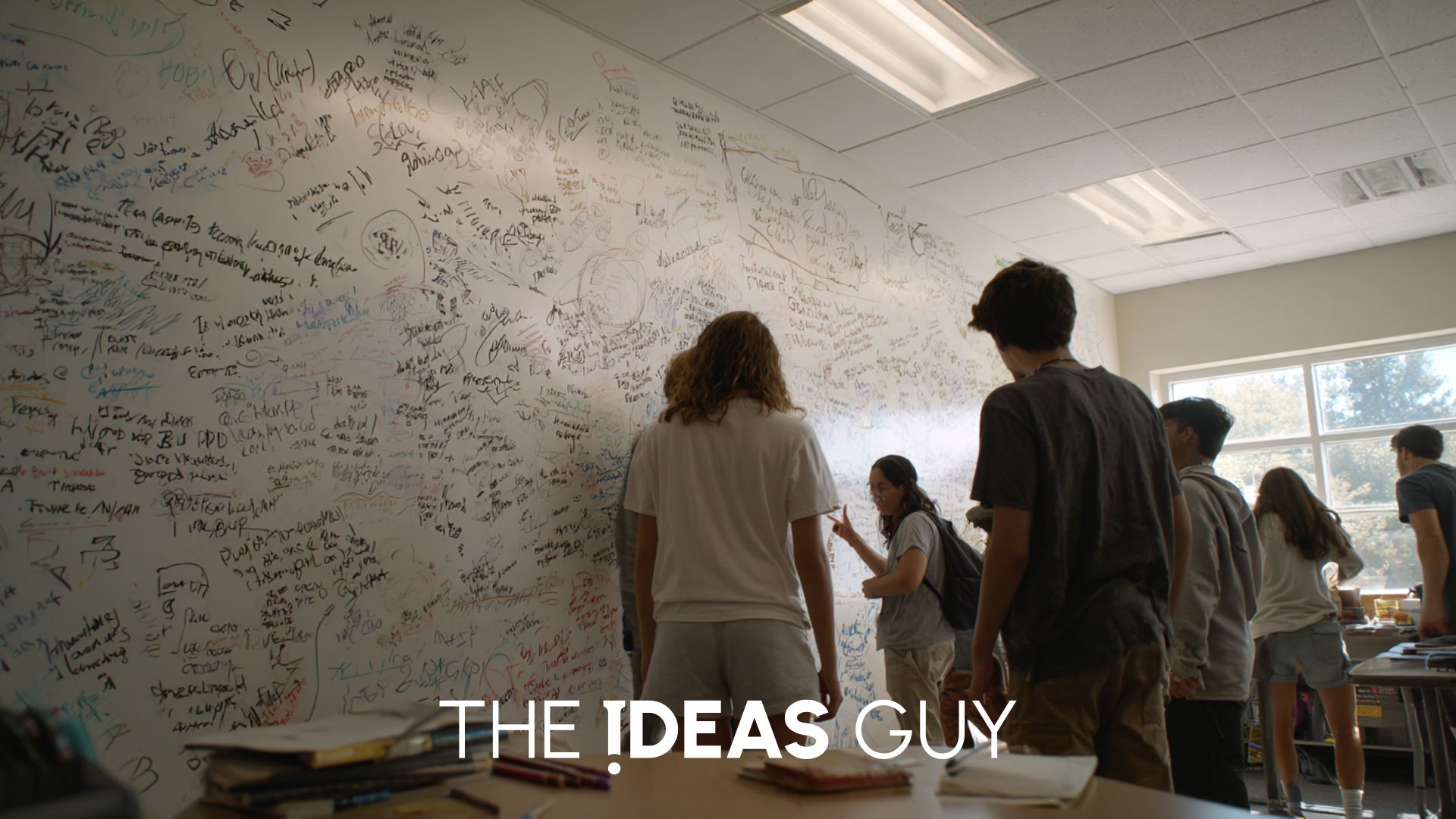
Moving toward genuinely dialogic classrooms requires changes at multiple levels: policy, school, and individual teacher practice. None are simple, but all are necessary.
At the policy level, the assessment regime must change. As long as high-stakes tests reward individual recall rather than dialogic thinking (or anything other than memorisation), schools will rationally prioritise transmission teaching. This doesn't mean abandoning assessment; it means rethinking what we assess and how.
I have long argued for portfolio-based assessment, where students demonstrate learning through multiple forms of evidence including recorded dialogues alongside exams, coursework, presentations or a myriad of other options, offers one alternative. Collaborative assessments, where groups solve problems together and are evaluated on their collective thinking, offer another. The International Baccalaureate's Extended Essay and Theory of Knowledge course provide models, though they remain accessible primarily to privileged students and are increasingly relegated as not as rigorous as traditional GCSE or A-Level routes.
Ofsted's framework could valorise dialogic teaching explicitly, training inspectors to recognise genuine dialogue and distinguish it from superficial group work. Currently, the pressure to demonstrate "progress" within single lessons pushes teachers toward transmission modes where learning appears more immediate and measurable.
Teacher training must place dialogic pedagogy at its centre, not as an add-on to existing practice. This means prospective teachers experiencing dialogue as learners, analysing what makes dialogue productive, and practising the specific skills of facilitating rather than transmitting. Professional development for current teachers requires similar approaches.
Schools need to create time and space for dialogic teaching. This might mean longer lesson periods, allowing for extended dialogue without constant interruption. It certainly means rethinking curriculum coverage, accepting that depth matters more than breadth, that genuine understanding of fewer things beats superficial familiarity with more.
Physical spaces should be redesigned to facilitate dialogue. Flexible furniture, adequate room for movement, acoustic design that allows conversation without cacophony - these practical considerations matter enormously. Some schools have created dedicated "dialogue spaces" designed specifically for extended conversation.
Individual teachers can begin even within constrained systems. Starting small - with one class, one unit, one extended dialogue per week - allows for experimentation and learning. The key is maintaining the five principles Alexander identified: ensuring talk is collective, reciprocal, supportive, cumulative, and purposeful.
Specific practical strategies help. Wait time after posing questions - genuine wait time, not the standard 0.9 seconds research shows is typical - allows students to formulate more thoughtful contributions. Explicitly teaching conversational norms - how to build on others' ideas, how to disagree respectfully, how to ask for clarification - makes dialogue more productive.
Recording and analysing dialogues reveals patterns invisible in the moment. Teachers who record and transcribe even brief exchanges often discover they dominate far more than they realised, or that a few students contribute most ideas, or that apparent dialogue is actually serial monologue with no genuine building of understanding.
The XP School in Doncaster (winner of Edufuturists’ Secondary School of the Year in 2025) provides one UK example of dialogic principles in action. Their model, influenced by Expeditionary Learning, structures learning around extended projects requiring sustained dialogue and collaboration. Students develop "habits of scholarship" that prioritise discussion, critique, and revision. The approach doesn't abandon content knowledge but positions it within dialogic frameworks where understanding develops through exchange.
Eton's Innovation and Research hub, despite the school's traditional image, has explored dialogic approaches to teaching politics and philosophy. Their recognition that elite education must develop dialogic capacities - the ability to engage with opposing views, to build arguments through conversation, to think with others - acknowledges what all schools should recognise.
The challenge is moving dialogic teaching from isolated examples to mainstream practice. This requires systemic change, not individual heroism. Teachers operating dialogically within transmission-focused systems face exhaustion from constant swimming against the tide. Sustainable change needs supportive policies, aligned assessment, appropriate training, and school cultures that value dialogue over coverage.
.jpg)
The Stakes Are Higher Than We Acknowledge
The conversation about dialogic education is often framed as a pedagogical preference - some teachers like discussion, others favour direct instruction, both have merit. This framing is dangerously wrong. The choice between transmission and dialogue isn't stylistic; it's fundamental. It determines what kind of thinking students develop, what kind of citizens they become, what kind of society we build.
Transmission teaching produces specific capabilities: following instructions, reproducing information, working individually, accepting authority. These aren't trivial skills, and some contexts genuinely require them. But they're insufficient for the challenges ahead. They worked in compliance culture; they won’t in innovation culture
Dialogic education develops different capacities: thinking with others, building understanding across difference, revising ideas based on evidence and argument, tolerating uncertainty whilst working toward clarity. These capabilities are essential for functional democracy, complex problem-solving, and human flourishing in pluralistic societies.
The democratic argument deserves particular emphasis. Genuine dialogue requires capacities that democratic participation depends upon: listening to opposing views without immediate dismissal, distinguishing evidence from assertion, recognising that your understanding might be incomplete or wrong, working toward shared understanding despite disagreement.
Schools teaching primarily through transmission aren't preparing democratic citizens; they're training subjects. They teach that knowledge flows from authority, that correct answers already exist, that your job is receiving and reproducing rather than creating and critiquing. These lessons extend far beyond classroom walls.
The employment argument is equally pressing. The work that remains distinctly human requires dialogic capabilities. Creative collaboration, complex problem-solving, genuine innovation - these happen through dialogue, through the collision of perspectives, through building understanding that no individual could reach alone. Transmission teaching develops neither the capabilities nor the disposition for such work.
More fundamentally, dialogic education respects students as thinking beings rather than empty vessels. It recognises that understanding isn't poured from teacher to student but constructed through joint activity. It treats classroom time as opportunity for developing minds rather than delivering content.
Socrates died for this principle. Vygotsky and Bakhtin worked under totalitarian regimes that recognised the threat genuine dialogue poses to authoritarian control. Alexander has spent decades advocating for approaches most schools resist implementing. The pattern is clear: systems preferring compliance over critical thought oppose dialogic education because it works.
We can continue running schools that produce compliant answer-givers, measuring success through standardised tests that reward memorisation and individual work. This is easier, more measurable, more comfortable. But it serves neither students nor society. In a world demanding citizens capable of thinking together about complex challenges, transmission teaching is educational malpractice.
The alternative requires courage. Courage from policymakers to reform assessment. Courage from school leaders to prioritise dialogue over test preparation. Courage from teachers to facilitate rather than transmit, to acknowledge uncertainty, to learn alongside students. Courage from parents to trust that genuine dialogue produces deeper learning than silence and worksheets.
The choice isn't between rigour and relevance, between knowledge and dialogue. Genuine dialogue requires and develops knowledge. Understanding emerges through conversational exchange that tests ideas, builds arguments, and refines thinking. Dialogic teaching is rigorous precisely because it demands more from both teacher and students than transmission ever does.
Socrates understood this. He knew that examining ideas through dialogue was harder, more uncomfortable, more threatening than accepting received wisdom. He did it anyway. The question is whether we have similar courage, or whether we'll continue praising Socrates whilst running schools that would have him executed.
Key Takeaways
- Genuine dialogue isn't discussion dressed up in question-answer exchanges. Dialogic teaching requires that talk is collective, reciprocal, supportive, cumulative, and purposeful. Most classrooms operate monologically despite appearing to encourage discussion.
- Learning is fundamentally social, happening in the Zone of Proximal Development through dialogue with more knowledgeable others. This isn't an optional pedagogical approach but a psychological reality about how understanding develops.
- The Socratic method isn't rapid-fire questioning toward predetermined answers. It's genuine enquiry that dismantles false certainty and develops critical thinking through uncomfortable dialogue. Teachers claiming to use it often aren't.
- Assessment regimes that test individual recall ensure transmission teaching dominates. Until we assess dialogic capabilities, schools will rationally prioritise what gets measured over what matters.
- Dialogic teaching requires intellectual humility from teachers. Facilitating genuine dialogue means being willing to not know, to be surprised by student thinking, to have your understanding shifted by conversation.
- The democratic and employment arguments for dialogue are urgent. Citizens need dialogic capacities for functional democracy; workers need them for distinctively human employment. Transmission teaching develops neither.
- Start small but start deliberately. One extended dialogue weekly, properly structured around Alexander's five principles, teaches more than multiple discussion sessions that remain fundamentally monologic.
Without sounding overly dramatic, I am convinced that unless we do this, and quickly, we will have no time to figure out how to live in a complex world that requires more than compliance. This isn’t as political or ideological position; it’s fundamentally human, practical and societal. If there are people doing this well, I’d love to meet them, champion them and find ways to collaborate with them across the world. This is an urgent call.
Further Reading
Discover more interesting articles here.