.png)
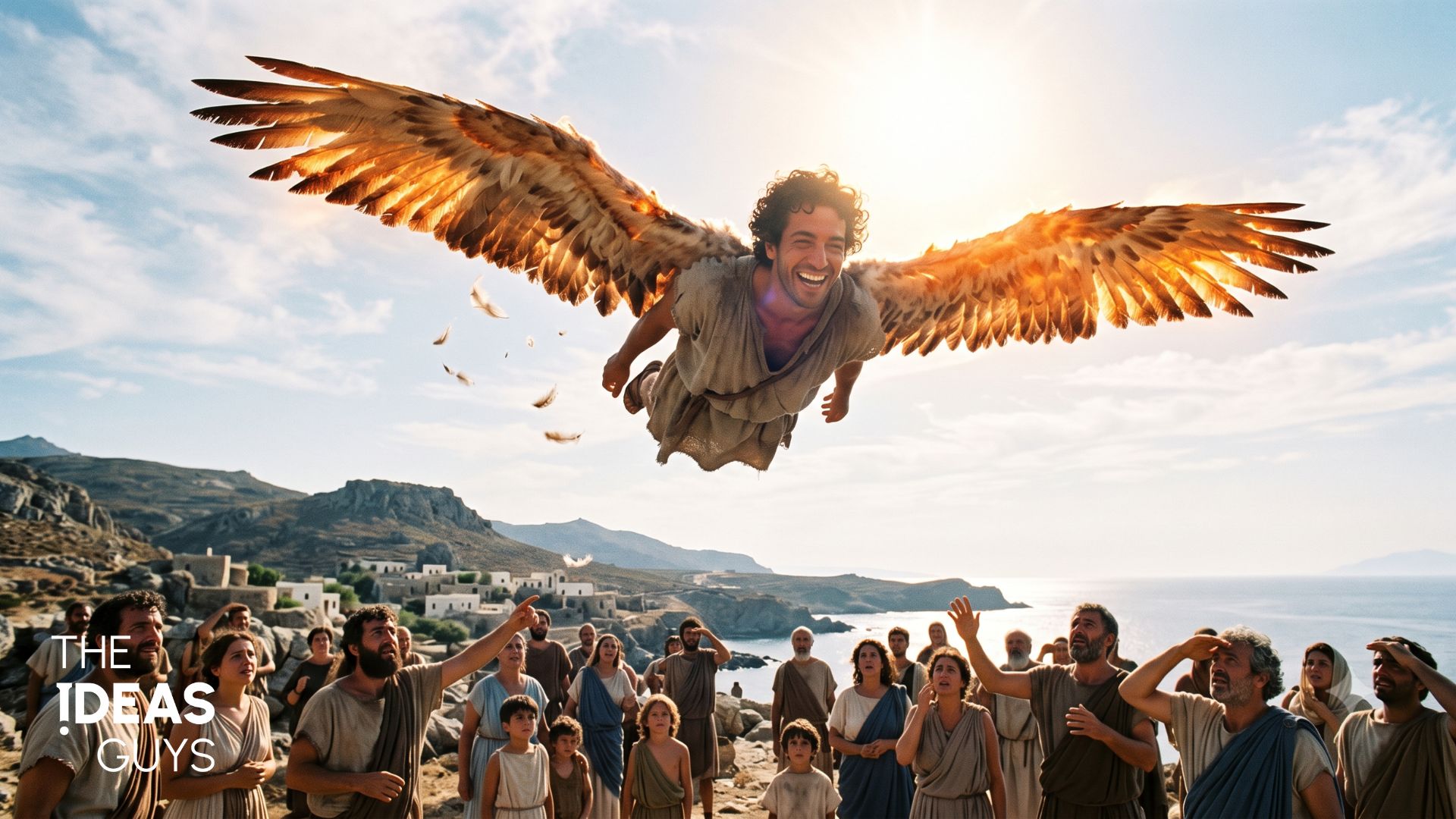
Heraclitus of Ephesus is one of the most quoted and least understood thinkers in Western philosophy in my humble opinion. Leaders seem to invoke him constantly. Conference slides cite him. LinkedIn posts misappropriate him with casual confidence. And almost universally, they get him wrong.
The standard reading goes something like this: Heraclitus said everything changes, the river is always moving, therefore embrace uncertainty and keep adapting. It's a tidy formulation. It also misses the point so completely that it would make the man himself reach for the hemlock - that was Socrates, but the sentiment stands.
Heraclitus wasn't simply observing that things change. He was arguing something far more radical, and far more useful. He was arguing that beneath all visible change there is an invisible structure - a rational principle governing the flux itself. He called it the logos. And if you can't perceive the logos, you're not navigating change at all. You're just being moved by it. That distinction matters enormously for anyone leading an organisation, a school, a team, or even a life. Reactive adaptation and intelligent navigation are not the same thing. One is a survival instinct. The other is a form of wisdom. Heraclitus was only interested in the second.
"Ever-newer waters flow on those who step into the same rivers." Heraclitus

What Heraclitus was actually saying
The fragments that survive from Heraclitus - he wrote in deliberately obscure, oracular prose, which is why the ancient Greeks nicknamed him "the Obscure" - point to a philosophy of structured change that is far more sophisticated than the motivational posters suggest.
The river metaphor, reconstructed by his student Cratylus as "you cannot step into the same river twice," was never primarily about change for its own sake (and Heraclitus never really said it verbatim). It was about the relationship between flux and identity. The river remains the river - it has banks, a direction, a name - even though the water is entirely different each time you step in. Something persists. What persists isn't the substance but the pattern.
This is why Heraclitus chose fire as his governing metaphor for the cosmos rather than water, earth, or air. As he wrote, in one of the most significant surviving fragments,
"This world, which is the same for all, no one of gods or men has made; but it was ever, is now, and ever shall be an ever-living Fire, with measures of it kindling, and measures going out." Heraclitus
Fire does not become things. It transforms things, continuously, in accordance with a law. It consumes and it releases. It appears destructive but is fundamentally ordered.
The logos - which translates roughly as reason, word, or principle - was his term for that order. Heraclitus believed most people sleepwalk through a world governed by rational structure because they're too distracted by surface appearances to notice it. "Although this logos is eternally valid," he wrote, "yet men are unable to understand it - not only before hearing it, but even after they have heard it for the first time." The harshness of that observation is pointed. He wasn't encouraging complacency in the face of change. He was issuing a challenge: learn to read the pattern, or remain at its mercy.

The comfort illusion and why we resist this
If Heraclitus was right - if the universe is fundamentally and irreversibly in flux - then why do human beings, and the institutions they build, spend so much energy pretending otherwise?
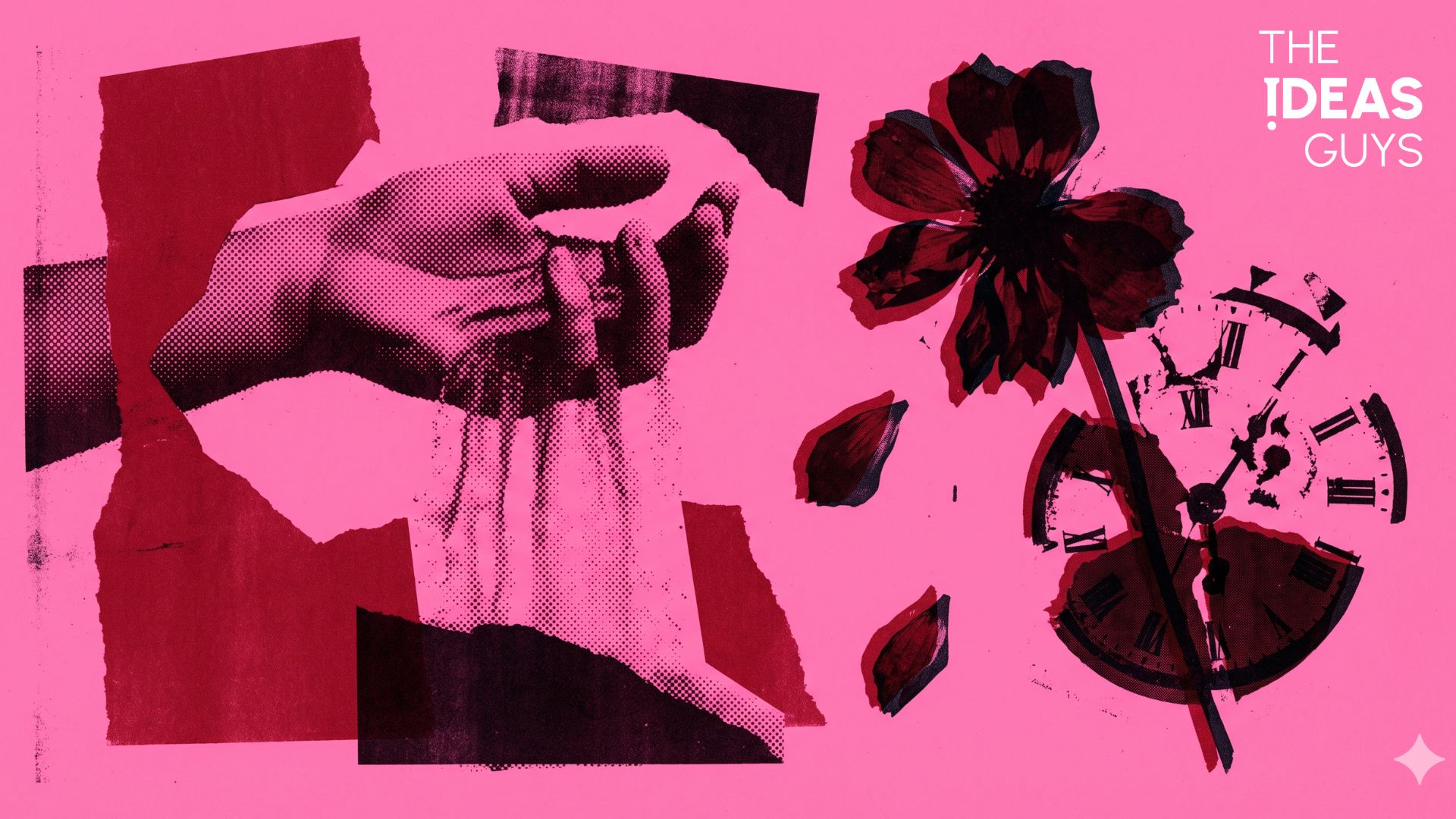
The psychological answer is uncomfortable but well-evidenced. In the 1970s, cultural anthropologist Ernest Becker argued in The Denial of Death that much of human civilisation - its monuments, institutions, ideologies, rituals - represents an elaborate attempt to deny the reality of impermanence. Permanence is not a feature of the universe; it is a feature of human anxiety. We build things to last not because they will, but because the alternative is too destabilising to confront directly.
When people are reminded of their own mortality (something I wrote about in These Stones, They Speak and If You Had All The Time on your Clock) - even subliminally - they become measurably more defensive of their worldview, more hostile to difference, and more attached to symbols of permanence and certainty. The drive for stability, in other words, is not merely a preference. It is a defence mechanism.
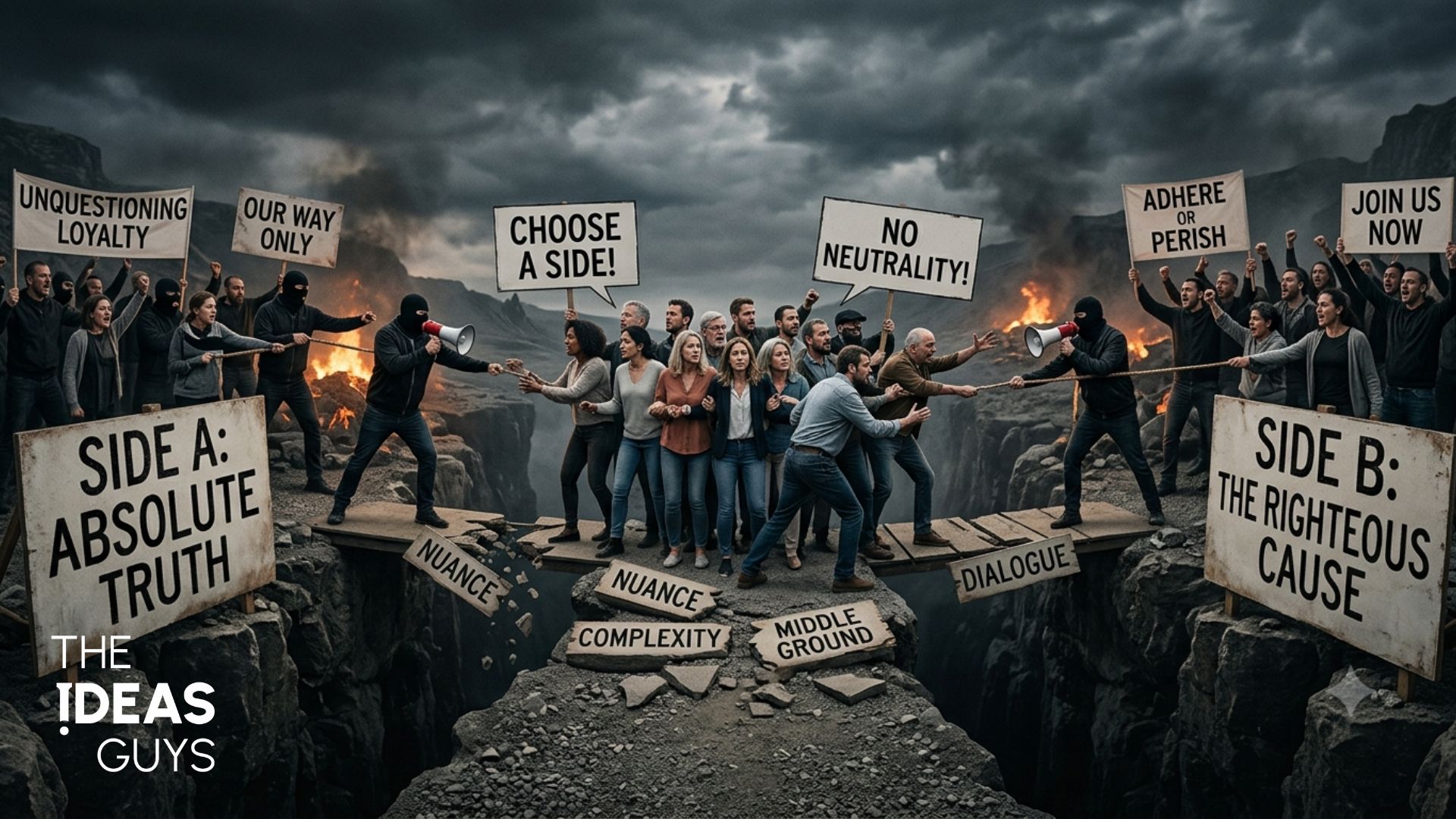
This plays out with striking clarity in businesses Committees deliberate longest over decisions with the least strategic significance because those decisions feel manageable, bounded, controllable. Strategy conversations gravitate towards the past ("what has always worked here") rather than the present. Restructures are announced as transformations and then quietly designed to preserve the existing power architecture. The language of change is deployed in service of stability.
I have sat in enough leadership meetings to know that the question "what should we stop doing?" is almost never asked, even when it's the most important question in the room. Becker would not be surprised. Stopping something permanent feels like a small death.
The irony is that this instinct for permanence doesn't protect organisations from flux. It simply means they meet it unprepared.

Ship of Theseus problem in practice
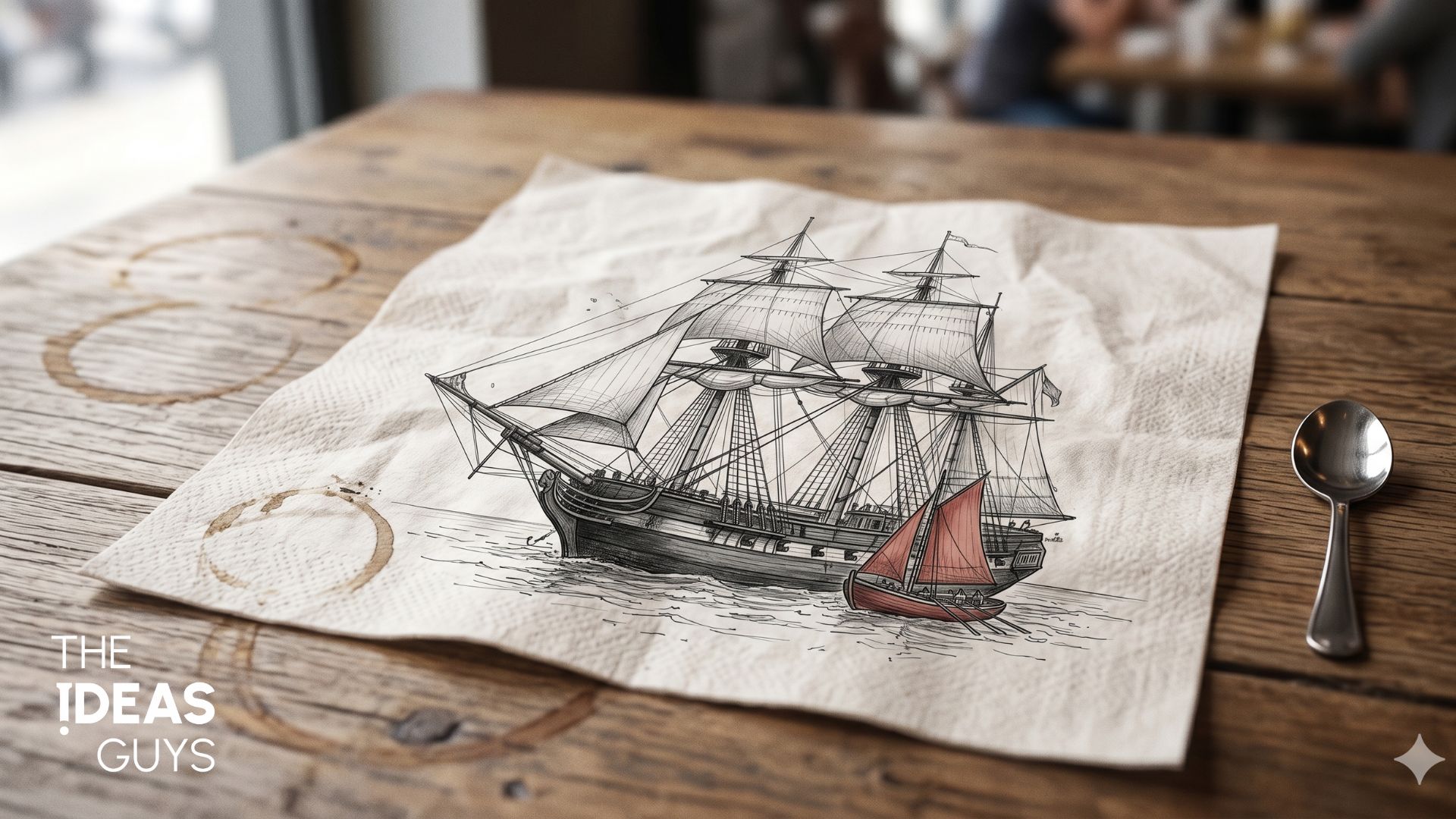
There is a philosophical puzzle, which is ancient and surprisingly practical, that gets to the heart of what's really at stake here. The Ship of Theseus was preserved in Athens as a monument to the hero, but as the planks rotted they were replaced one by one. Eventually, every original plank had been replaced. The question the philosophers asked was: is it still the same ship? (Or for a more culturally modern one, I am reminding of Trigger’s broom in Only Fools and Horses!)
Clip from Only Fools & Horses, Heroes and Villains, aired December 25, 1996
The later addition to the puzzle is sharper still. Suppose someone collected all the discarded original planks and rebuilt the original ship from them. Now which one is the Ship of Theseus?
This isn't an abstract riddle. It is a live operational question for any organisation with a significant history. What is the BBC, now that almost nothing about its technology, workforce, governance or delivery model resembles the institution John Reith founded? What is the Church of England, whose theology, social authority and cultural reach have changed almost beyond recognition in fifty years? What is a school that has turned over its entire teaching staff, changed its curriculum, rebuilt its buildings and replaced its leadership team twice, but still insists on the continuity of its "ethos"?
The philosopher Derek Parfit took the puzzle further in Reasons and Persons from 1984, applying it to personal identity. Parfit argued, counterintuitively, that there is no deep fact of the matter about personal identity over time - that what we call "the self" is better understood as a series of connected psychological states rather than a single continuous entity. This is not a cause for despair, Parfit suggested, but for liberation: once you stop insisting on the fiction of the unchanging self, you can engage more honestly with who you are becoming.
The leadership implication of this is significant. Organisations that cling rigidly to a fixed identity - "this is who we are, this is how we do things" - are not protecting something real. They are protecting a story. Sometimes that story is worth protecting, because it provides continuity of purpose and coherent culture. You stick to company values, maintain brand identity, and all that jazz. But sometimes it is simply protecting the interests of those who benefited from the way things used to be. Knowing the difference requires exactly the kind of honest reckoning most leadership teams avoid.
Logos in practice - reading the pattern
For me, where the Heraclitean insight becomes genuinely useful rather than merely provocative is that if the world is in flux but the flux is structured, then the leadership task is not to resist change, nor simply to accept it, but to develop the capacity to read it. The logos is not obvious. It requires attention, patience, and a willingness to look past what is immediately visible.
In the 1990s, complexity theorist Dave Snowden developed the Cynefin framework (pronounced "ku-nev-in," a Welsh word meaning habitat or haunt) as a tool for making sense of different kinds of problems. The framework distinguishes between complicated problems - which have correct answers that experts can find - and complex problems, where cause and effect are only visible in retrospect and the system itself changes in response to intervention. Educational institutions, healthcare systems, and most large organisations operate primarily in the complex domain, not the complicated one. Yet leaders are almost universally trained to treat their problems as complicated, searching for the correct solution rather than learning to read the evolving dynamics of their system.
This is the practical version of what Heraclitus was getting at. The logos is not a formula you can apply once. It is a capacity you develop through sustained, honest engagement with what is actually happening, as distinct from what you expected or wished would happen. It requires what the ancient Greeks called phronesis - practical wisdom - which is itself only developed through experience rather than training. (I've touched on phronesis multiple times, first back in August 2024 in The Tangent Advantage, in the context of navigating uncertainty in educational leadership, and it bears repeating here because it is one of those concepts that genuinely does the work it promises.)
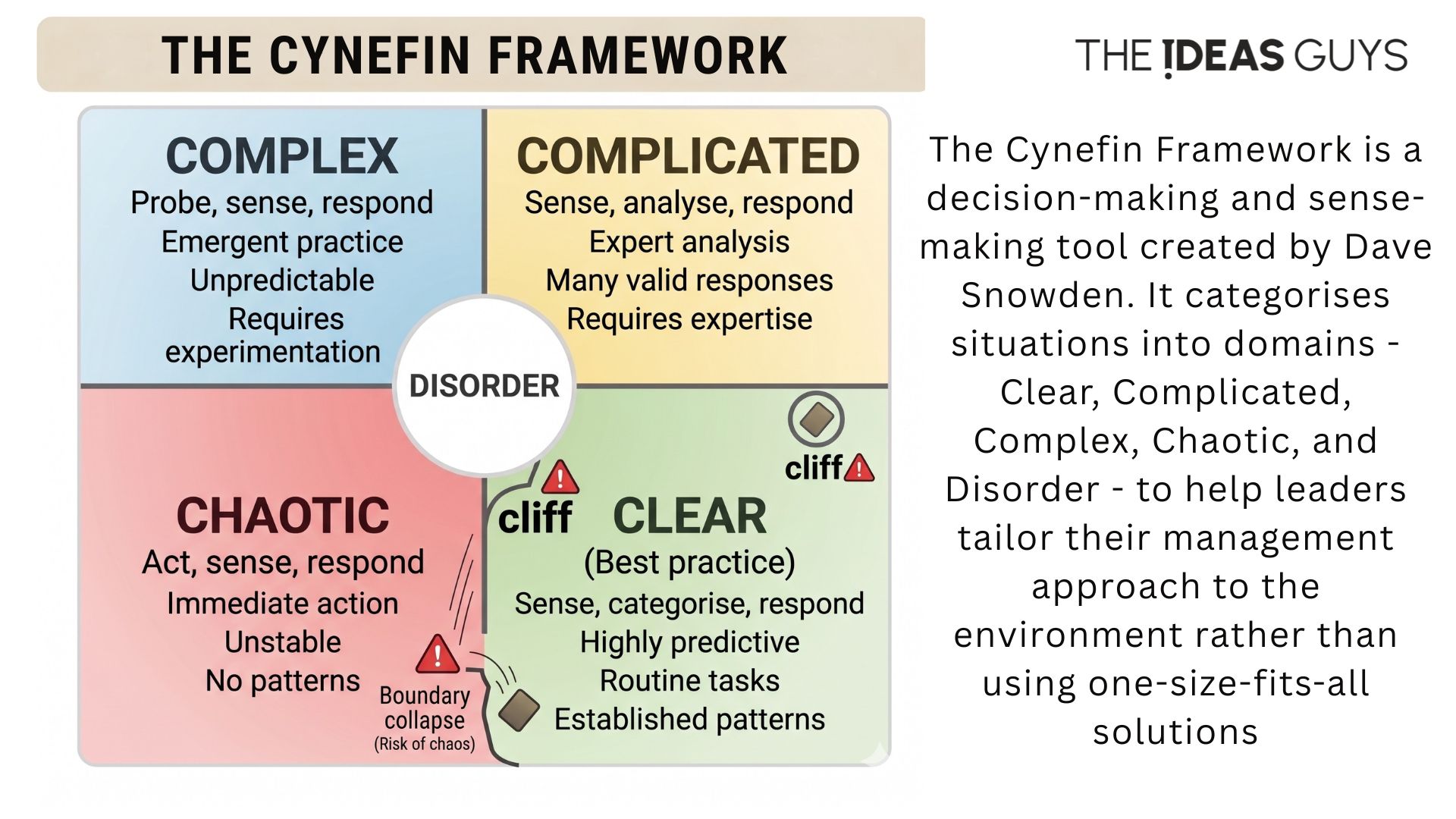
Reading the pattern means asking questions that most organisations don't make time for. Not "how do we manage this change?" but "what is the change a symptom of?" Not "how do we return to normal?" but "what is the new normal revealing about our underlying dynamics?" Not "how do we stabilise this?" but "what is the instability telling us?"
These are harder questions. They require genuine intellectual courage because their honest answers are sometimes threatening to the people in the room. But they are the questions that correspond to reality. Everything else is noise management.
The Stoic inheritance
It is worth being explicit about where Heraclitus's philosophy went next, because his most significant intellectual heirs are among the most practically useful thinkers in the leadership canon - and they are rarely credited for their origins.
Stoicism, which emerged in Athens around 300 BC with Zeno of Citium and was later developed by Epictetus, Seneca, and Marcus Aurelius, was built directly on Heraclitus’ foundations. The Stoics took the logos and made it both theological (the rational principle underlying nature) and ethical (the standard against which human conduct should be judged). Their central practical teaching - the distinction between what is and is not within our control - is essentially an application of Heraclitean flux to the question of how to live.
Marcus Aurelius, writing his private Meditations (which I think is possibly the greatest book of all time) as a serving emperor during war and plague, returned again and again to the Heraclitean theme,
"Loss is nothing else but change, and change is Nature's delight." Marcus Aurelius
And, more starkly,
"Time is a river, a violent current of events, glimpsed once and already carried past us, and another follows and is gone." Marcus Aurelius
These are not consolations. They are orientations. The Stoics were not trying to feel better about impermanence. They were training themselves to think clearly within it.
Epictetus, who was born a slave and taught philosophy after being freed, was perhaps the most direct.
"Seek not that the things which happen should happen as you wish; but wish the things which happen to be as they are, and you will have a tranquil flow of life." Epictetus
This is not passivity. Epictetus was one of the most intellectually demanding teachers of his age. The point is that wishing for permanence in a universe structured by flux is not merely futile - it is a cognitive error that corrupts your ability to act effectively.
The practical inheritance of this for leaders is this: the question is never whether your institution will change. It will. The question is whether your leadership responds to the logos of that change - its underlying pattern and direction - or merely to its surface turbulence. Leaders who are perpetually reactive, who treat each new development as an unprecedented crisis, have lost the thread of the logos. They are navigating by weather rather than by stars.
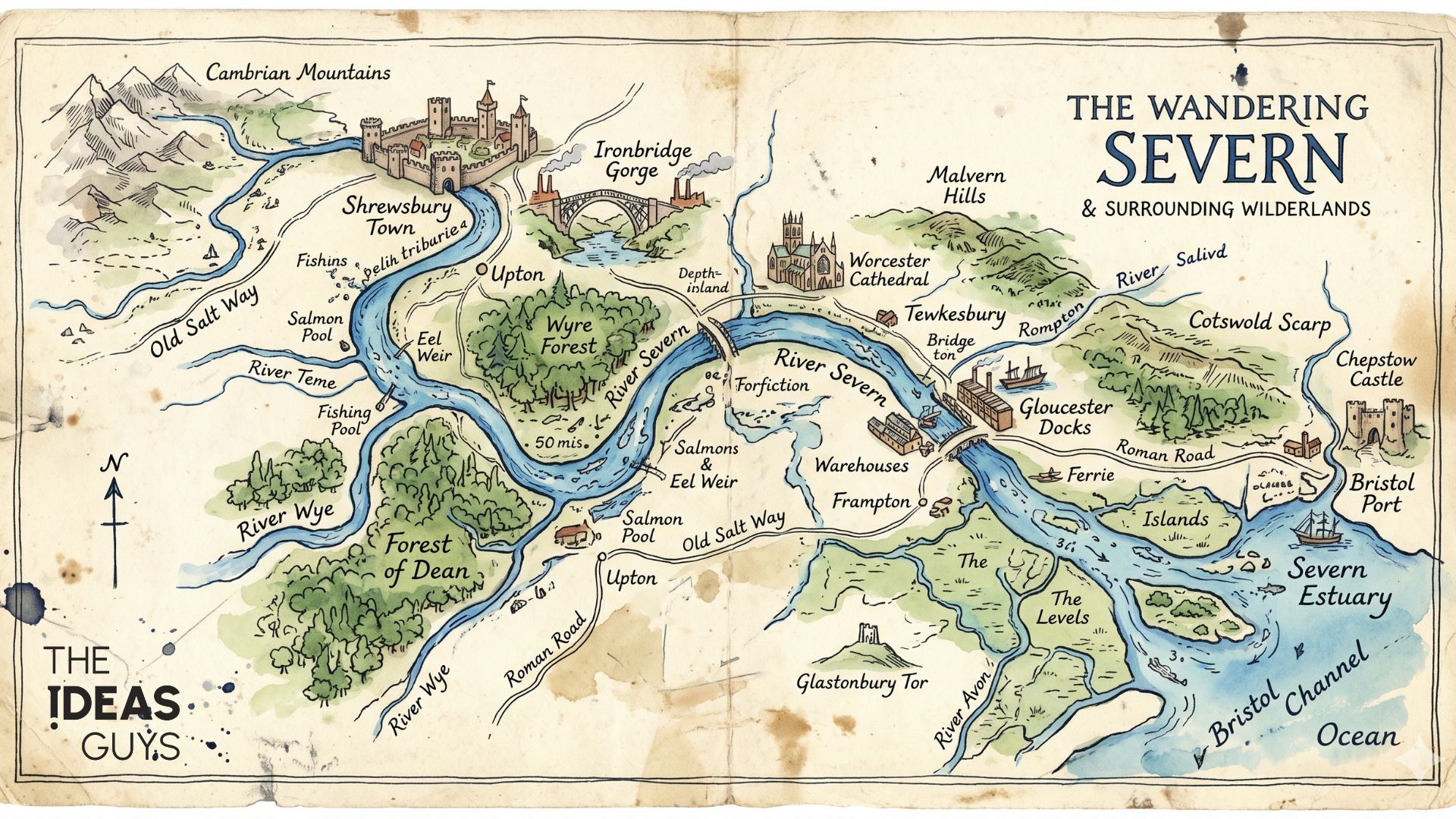
I noted in Walking on Shifting Sands that in a shifting landscape, the best leaders don't pretend to be mapmakers - they become guides. The Stoic reading of Heraclitus sharpens that further. The best guides don't just move through uncertain terrain. They understand the terrain. They read it. They know which rivers run shallow in summer, which paths flood in autumn, which slopes are deceptive. That knowledge is not certainty. It is the capacity to make better judgements under conditions of irreducible uncertainty. That is what logos - practical, hard-won, constantly revised - actually looks like in a leadership context.
Impermanence without despair
It would be incomplete not to acknowledge that Heraclitus was not thinking about this alone. Across the world, in roughly the same historical period (the fifth and sixth centuries BC are sometimes called the Axial Age precisely because of this parallel flowering of philosophical insight), Siddhartha Gautama was developing a philosophy that arrived at strikingly similar conclusions through different means.
The Buddhist concept of anicca - impermanence - is one of the three marks of existence, alongside suffering (dukkha) and non-self (anattā). Everything that arises passes away. Attachment to permanence is the primary source of suffering, not because permanence is desirable and unattainable, but because it was never real to begin with. The Pali Canon records the Buddha's observation,
"Whatever is impermanent is subject to change. Whatever is subject to change is subject to suffering." The Buddha
The practical teaching that follows from anicca is not resignation but clear-sightedness. By refusing to invest in the permanence of any state, situation, or identity, you free yourself to engage more fully with what is actually present. This has obvious resonance with the Stoic tradition, and modern psychology has found robust support for it: attachment to fixed outcomes is strongly associated with anxiety and reduced resilience, while psychological flexibility - the willingness to hold outcomes lightly while committing fully to action - is one of the most reliable predictors of effective performance under pressure.
The psychologist Steven Hayes, whose Acceptance and Commitment Therapy draws heavily on mindfulness traditions, frames this as the difference between experiential avoidance (refusing to acknowledge what is) and committed action (engaging fully with what is, in the service of your values). The parallel with Heraclitean logos is clear. Both traditions are asking you to perceive reality accurately - including its impermanence - as a precondition for acting wisely within it.
Key Takeaways
- Heraclitus wasn't just a philosopher of change - he was a philosopher of pattern. The river metaphor is about the relationship between flux and underlying structure, not simply about accepting that things move. If your take-home from Heraclitus is "change is normal," you've missed the more important half of what he was saying.
- The drive for permanence is a psychological defence mechanism, not a strategic position. Terror Management Theory demonstrates that human beings systematically overvalue stability in ways that correlate directly with anxiety rather than rational assessment. Recognising this in yourself and your organisation is not navel-gazing - it is prerequisite thinking for any serious strategic conversation.
- Identity under flux is a practical question, not just a philosophical one. The Ship of Theseus problem plays out constantly in institutional life. The honest question for any organisation is not "are we the same?" but "what, specifically, are we trying to preserve, and why?" Culture is not automatic. It is a choice, made repeatedly, under pressure.
- Reading the pattern requires different skills than managing the turbulence. The Cynefin distinction between complicated and complex problems is operationally significant. Most organisations are better equipped to solve complicated problems than to navigate complex ones, which is why they persistently misapply the wrong toolkit. Developing phronesis - practical wisdom grounded in honest experience - is the work that distinguishes genuine strategic leadership from sophisticated fire-fighting.
- The Stoic tradition is the most practically developed application of Heraclitean flux. Marcus Aurelius and Epictetus were not writing self-help. They were training themselves - under conditions of extreme pressure - to distinguish between what was in their control and what was not, and to act effectively within that honest assessment. This is still the most useful framework for leadership under conditions of sustained uncertainty.
- Psychological flexibility is not the same as having no fixed commitments. The Buddhist and Stoic traditions are sometimes misread as advocating detachment from all outcomes. They don't. They advocate clarity about values combined with honest acknowledgement of impermanence. You can be deeply committed to the purpose of your organisation while remaining genuinely open about how that purpose is best served in conditions you cannot fully predict.
Heraclitus lived in Ephesus, on what is now the western coast of Turkey, in a period of considerable political and social turbulence. He reportedly held the common people of his city in some contempt - not for lacking education, but for lacking the willingness to think. That is probably too harsh a judgement of anyone. But it points to something real. The logos is available to anyone willing to look for it. Most of us, most of the time, prefer the comfort of not looking. The invitation Heraclitus extends - still, across two and a half thousand years - is to step into the river anyway, with your eyes open. Not because you can stop it flowing. Because understanding the current is the only form of navigation worth having.
Further Reading
Discover more interesting articles here.